Shrines
Tsurugaoka Hachimangu
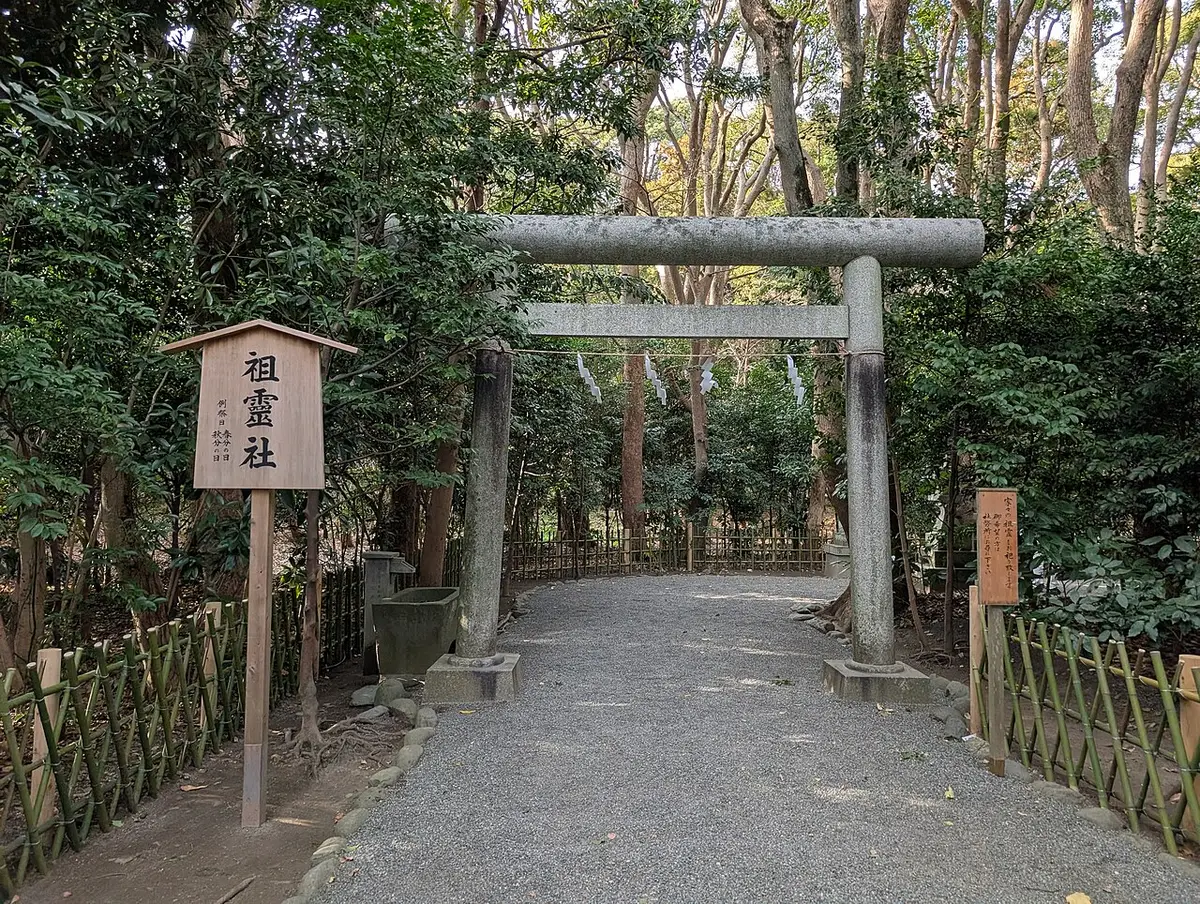
Table of contents
Tsurugaoka Hachimangu is the shrine Kamakura was built around. Minamoto no Yoritomo moved it to the foot of the hill here in 1180, laid the avenue Wakamiya-oji straight from its steps to the sea, and made it the guardian shrine of the samurai government. It is still the city’s busiest site: Kamakura counted 6.6 million visits to the shrine in 2025, according to the city’s tourism statistics. The grounds are free and open from 6:00 to 20:00, about 10 minutes on foot from the east exit of Kamakura Station. Only the treasure hall, the seasonal peony garden and the museums charge extra.
Fee freeHours 6:00-20:00, dailyFrom Kamakura Stn 10 min walk (east exit)Best early April, mid-September, JanuaryMapOfficial site
How the grounds are laid out
The shrine sits at the north end of a straight line that runs all the way to the beach. Walk it from the station and you meet the parts in this order; the shrine’s own tour of the grounds numbers each building, and our Kamakura map shows the route from the station.
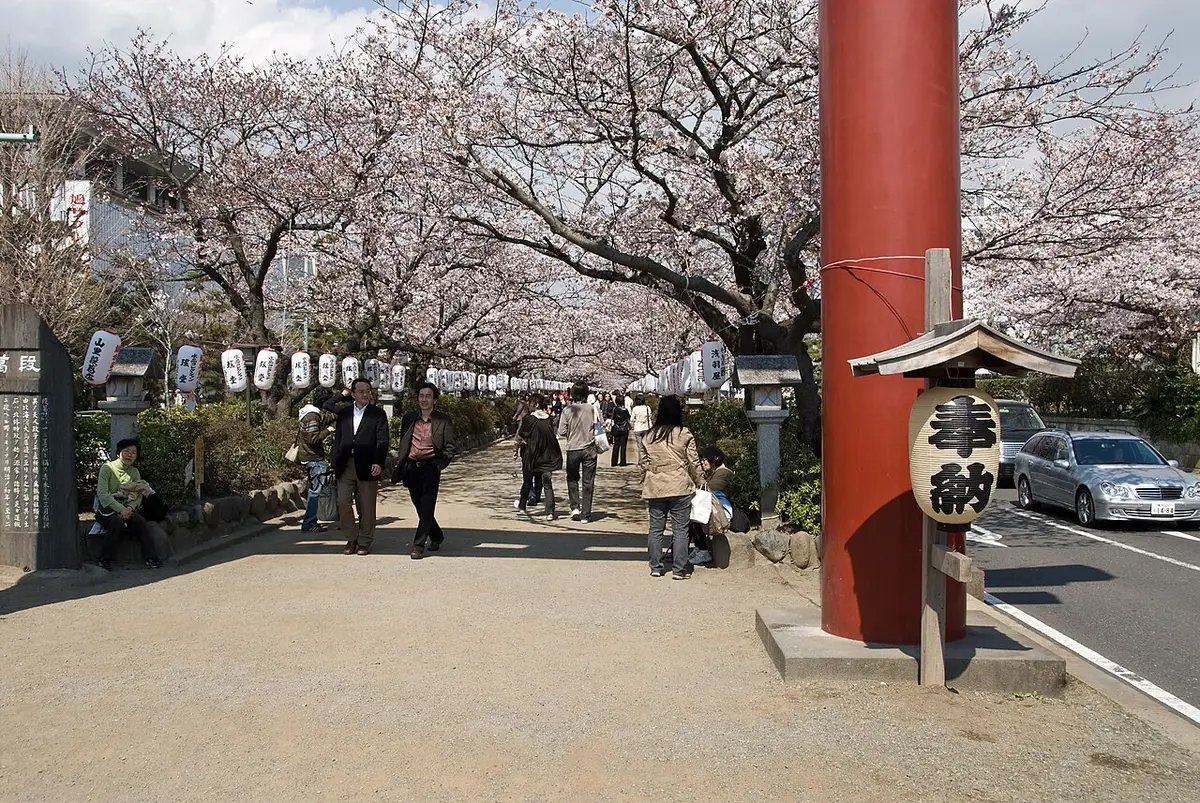
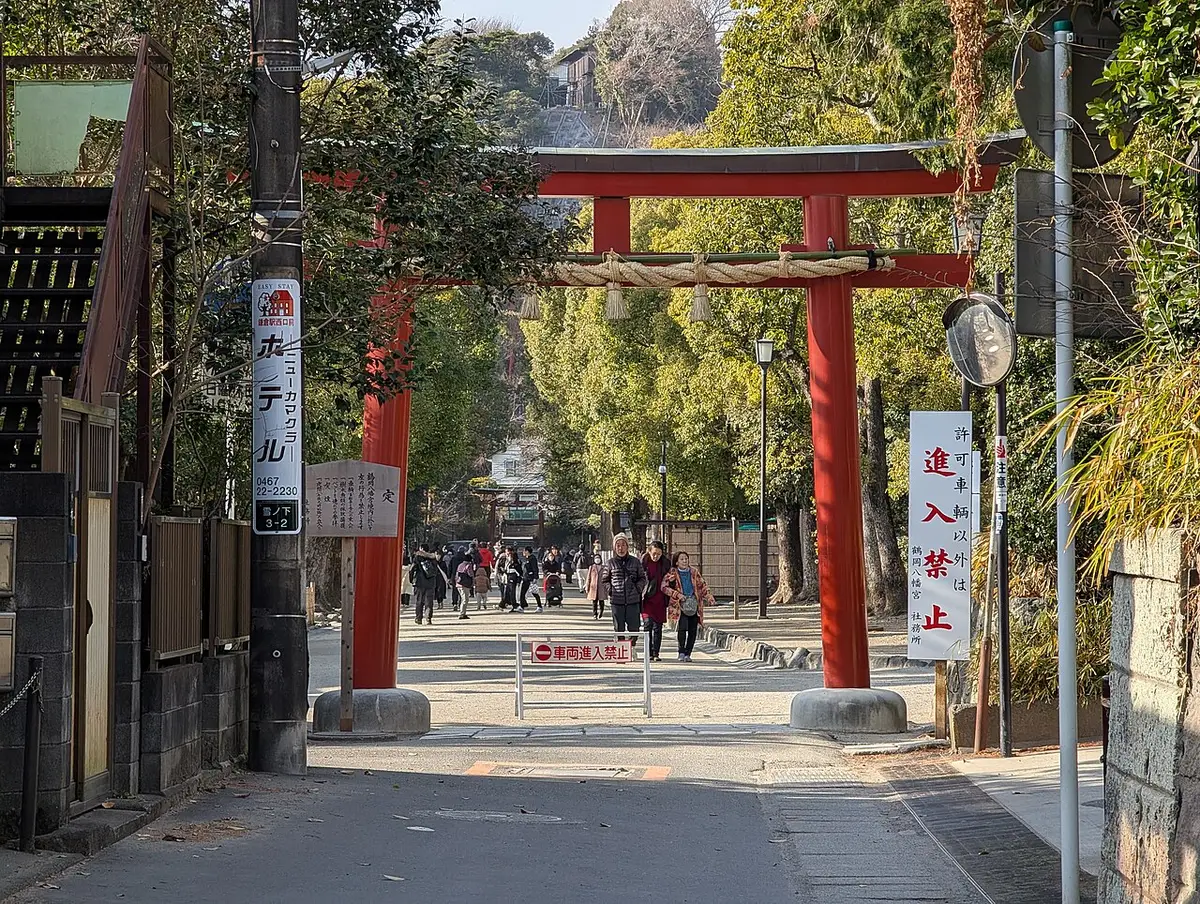
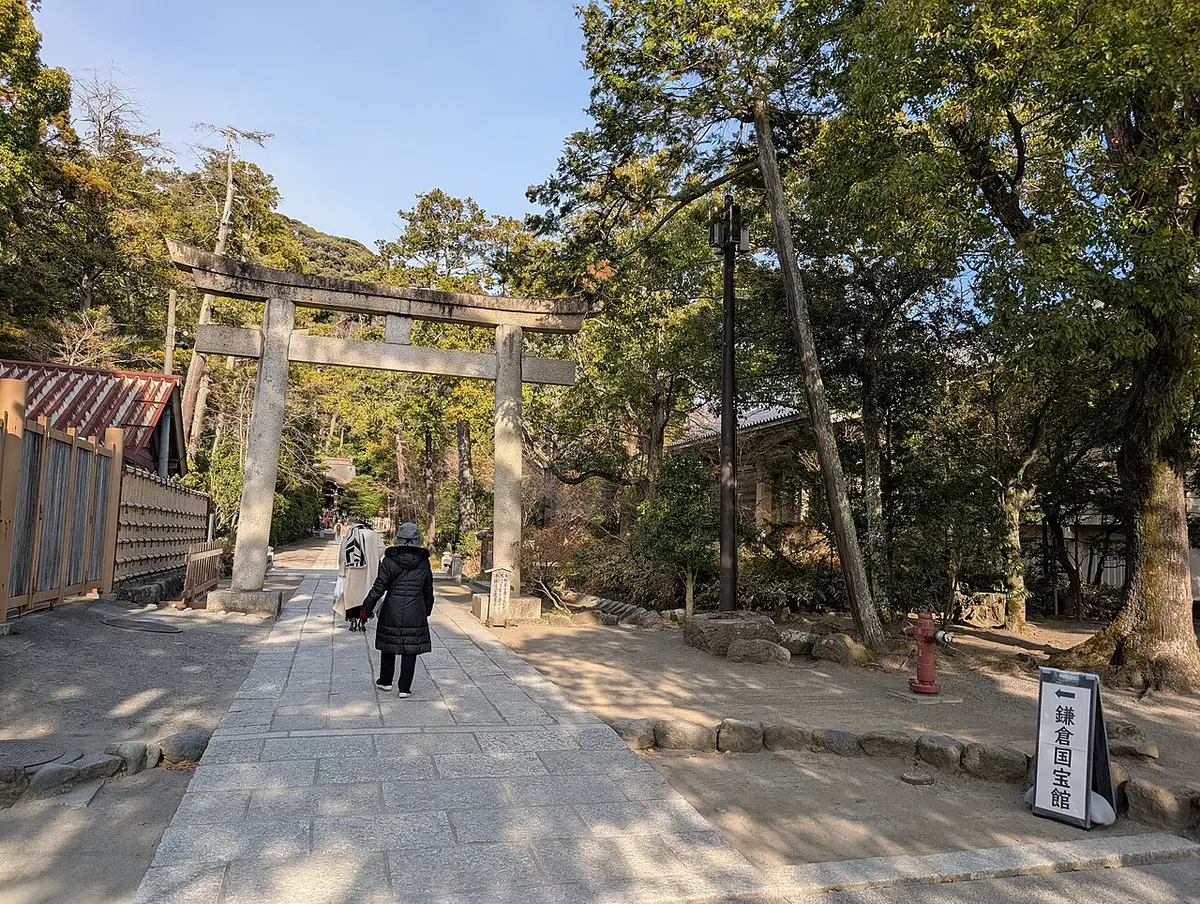
Wakamiya-oji and the Dankazura. The avenue passes under three torii. The first, near the sea, is the great torii known as Hama-no-otorii; the present one dates from 1668. Between the second and third torii the road lifts into the Dankazura, a raised path between rows of cherry trees. Old chronicles such as the Azuma Kagami say Yoritomo built it as a prayer for the safe birth of his first child. Walking up the Dankazura, rather than along Komachi-dori, is the way to arrive. You can rent a kimono for the walk at the kimono shop by the Komachi-dori entrance. VISIT KAMAKURA’s page on Wakamiya-oji has the background.
The Genpei ponds. Inside the third torii, the path crosses between two ponds that Yoritomo ordered dug. The Genji Pond on the right has three islands, for prosperity; the Heike Pond on the left has four, for decline, a reminder of the war in which Yoritomo’s Minamoto clan destroyed the Taira. On the Genji island stands Hataage Benzaiten, a shrine to the goddess said to have aided Yoritomo’s rising, with the Masako Stone behind it, a stone for marital harmony named after his wife. Cherry blossom in spring and red and white lotus in summer make this the prettiest corner of the grounds. The peony garden is beside the Genji Pond.
The Maiden and the yabusame course. In the middle of the grounds, the open-sided Maiden (or Shimohaiden) stands where, the shrine says, Shizuka Gozen danced in devotion to Yoshitsune, Yoritomo’s estranged brother, in front of the shogun. Weddings and festival dances are held here. The path that crosses the middle of the grounds from east to west is the yabusame course, where mounted archers ride every 16 September.
The Great Stone Steps and the main shrine. At the back, the Great Stone Steps climb to the Main Shrine (Jogu or Hongu), which enshrines Emperor Ojin, Empress Jingu and Himegami. From the top you look straight down Wakamiya-oji, and on clear days you can see the Pacific and Izu Oshima. Beside the steps grows a young ginkgo from the root of the Great Ginkgo, which watched over the shrine for centuries until strong winds toppled it in the early morning of 10 March 2010. The treasure hall is in the western corridor of the main shrine.
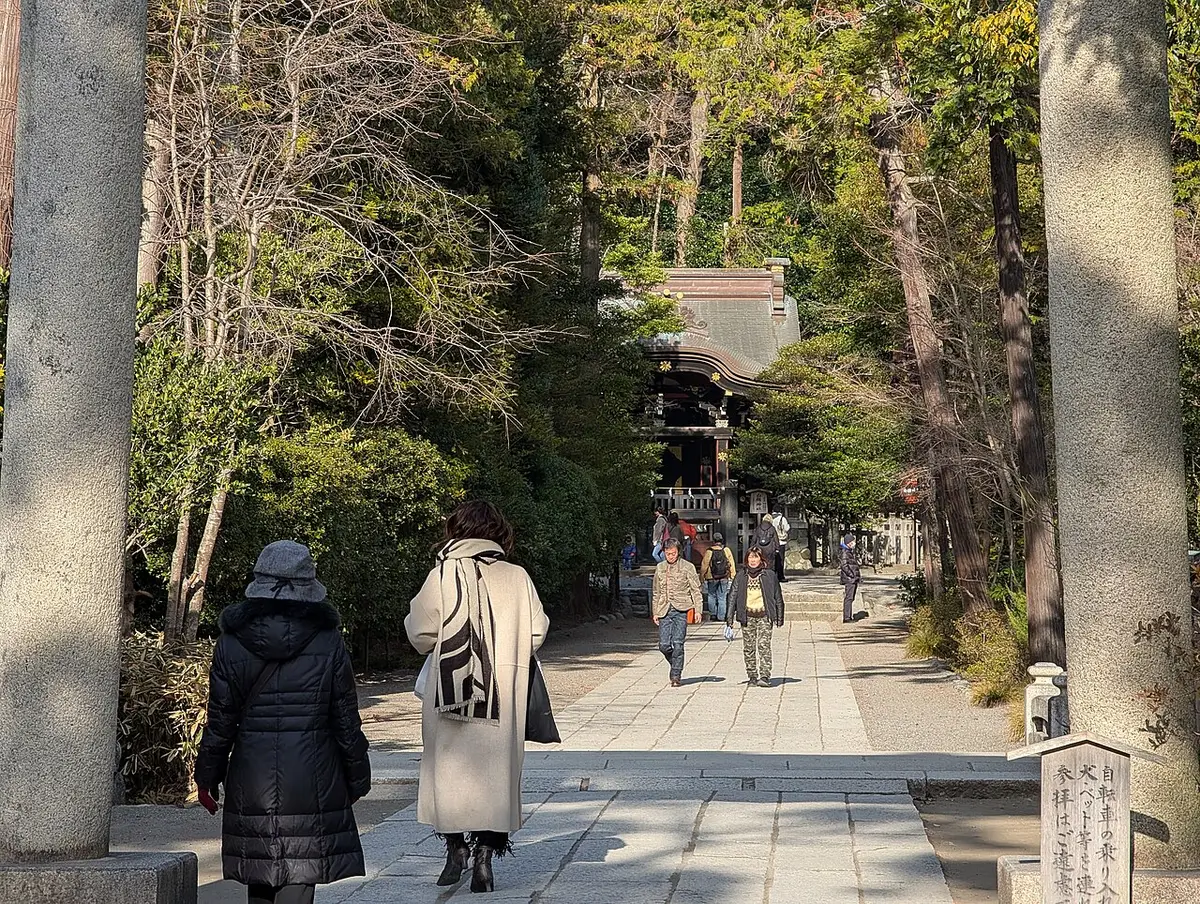
The smaller shrines. At the foot of the steps stands the Wakamiya (Gegu), which, like the main shrine, is a national important cultural property. Further east, the black-lacquered Shirahata Shrine honors Yoritomo and his son Sanetomo, the poet shogun. West of the main shrine, a path of red torii leads up to Maruyama Inari, the oldest building in the grounds, dating from the Muromachi period. These are quieter than the main shrine even on busy days.
Free and paid areas
Most of what you come to see is free. These are the places that charge, with the latest fees and hours the shrine and museums publish.
Treasure hall (Homotsuden)
A small hall in the western corridor of the main shrine shows the shrine’s documents and sacred treasures in changing exhibitions, from swords and lacquer to records of the Kamakura period. Entry is ¥200 for adults and ¥100 for children; it is open 9:00 to 16:00, and at New Year it opens at midnight on 1 January.
Fee ¥200 (children ¥100)Hours 9:00-16:00Where main shrine, west corridorMapOfficial site
Peony garden (Shinen Botan Teien)
A strolling garden on the shore of the Genji Pond, planted with winter and spring peonies. It opens only when they bloom: the New Year peonies from 1 January until about mid-February, and the spring peonies from late March to late April (20 March to late April in 2026). Entry is ¥500; the garden is open 9:00 to 16:30 with last entry at 16:00. It is closed between the two seasons and for the rest of the year.
Fee ¥500Hours 9:00-16:30 (in season)Season January to mid-February; late March to late AprilMapOfficial site
Kamakura Bunkakan Tsurugaoka Museum
By the ponds, the former Museum of Modern Art building by architect Junzo Sakakura reopened in 2019 as the shrine’s culture museum. Exhibitions change through the year and so does the fee: the show running from 9 October 2026 to 24 January 2027 costs ¥800 for adults and ¥400 for children. The museum is open 10:00 to 16:30 (last entry 16:00) and closed on Mondays. Its cafe displays part of the trunk of the fallen Great Ginkgo. Check the museum’s calendar for closures between exhibitions.
Fee by exhibition (¥800 to Jan 2027)Hours 10:00-16:30, last entry 16:00Closed MondaysMapOfficial site
Kamakura Kokuhokan
The city’s National Treasure Museum stands inside the shrine grounds, about two minutes’ walk from the main approach. It keeps Buddhist sculpture and treasures from Kamakura’s temples. Entry for regular shows is ¥400; special exhibitions cost more. It is open 9:00 to 16:30 (last entry 16:00) and closed on Mondays.
Fee from ¥400Hours 9:00-16:30Closed MondaysMapOfficial site
Festivals and their dates
The shrine holds rites almost every month. These are the ones worth planning around, with the dates in the shrine’s festival calendar (in Japanese).
- 1 January, Saitan-sai. The year’s first rite at 5:00; at 7:00 shrine maidens dance at the Maiden.
- 1 to 7 January, Gohan gyoji. The shrine’s sacred seal, normally kept deep in the main shrine, is pressed to visitors’ foreheads for health and protection. Students facing exams queue for it.
- 4 January, Chona-hajime-shiki. Builders chanting work songs carry sacred timber up the Dankazura from the second torii, then perform a ceremony with medieval tools to open Kamakura’s building year.
- 5 January, Joma shinji. After a 10:00 rite, archers in traditional dress shoot at a target about 156 cm across from 27 m away, to drive out evil for the year.
- 15 January, Sagicho. New Year decorations are burned in a sacred fire by the Genji Pond at 7:00.
- Late April, worshippers’ festival. Includes yabusame mounted archery in the manner of the September festival.
- Early June, firefly release. Fireflies raised in the shrine’s pond are released at dusk after a rite at the Maiden.
- 30 June, Oharae. A purification rite for the first half of the year; in June you can pass through a large grass ring.
- 7 July, Tanabata. Bamboo hung with colored paper decorations around the Maiden and gate.
- Early August, Bonbori festival. For three days (some years four), from the day before Risshu, the traditional first day of autumn, to 9 August, about 400 paper lanterns painted by writers, artists and public figures line the approach and are lit each evening.
- 14 to 16 September, Reitaisai (annual grand festival). The most important festival of the year, held since 1187. On the 15th, three portable shrines are carried down Wakamiya-oji to the second torii in a procession several hundred meters long. On the 16th comes yabusame: archers in Kamakura-period hunting dress shoot at three targets from galloping horses.
- 15 November, Shichi-go-san. Families bring children aged three, five and seven in their best clothes.
- 16 December, Gochinza kinen-sai. An evening rite at 17:00 with sacred music that dates from the shrine’s founding.
For yabusame, arrive early, because the places along the course fill first. Our bloom and crowd calendar marks these dates alongside the flower windows.
New Year at Tsurugaoka Hachimangu
Hatsumode, the first shrine visit of the year, is the shrine’s biggest event. In 2025, January brought more visits to Kamakura than any other month, more than double the next busiest. For New Year 2026 the shrine’s facilities guide set out these arrangements: the Yanagihara rest area stayed open all night from 21:00 on 31 December, the year’s first rite started at 5:00 on 1 January, the treasure hall opened at midnight, and the peony garden opened for the New Year peonies on 1 January. Shrine parking was closed on New Year’s Eve night and limited on 1 to 3 January.
If you want the atmosphere, go on the night of 31 December or the morning of 1 January and expect queues on the Dankazura and the steps. If you want to see the shrine, go from 4 January, when the Chona-hajime and Joma rites still give you a taste of the season, or on any weekday later in January. Our Kamakura in winter page covers the rest of the season, and the city’s live crowd map shows how busy Wakamiya-oji and Komachi-dori are on the day.
When to visit and how to fit it in
Seasons. Early April for the cherry trees on the Dankazura and around the ponds; late April for peonies and yabusame; summer for lotus on the Genpei ponds; mid-September for the grand festival; late autumn for ginkgo and maple around the Yanagihara pond. For timing, the nearest official record is the full-bloom date at Yokohama:
These are Japan Meteorological Agency observations at the Yokohama weather station, not dates measured at the shrine. See our cherry blossom page and autumn leaves page for the spots.
Getting here. Kamakura is about an hour from Tokyo by JR; see how to get to Kamakura and the day trip from Tokyo. Use the east exit and walk up Wakamiya-oji. A street food and historical sites walking tour starts at Kamakura Station, includes the shrine and then takes the Enoden to the Great Buddha. Our best time to visit page compares the months.
Time of day. The gates open at 6:00, hours before the Komachi-dori shops, so an early walk up the Dankazura is the quietest way to see the shrine. Crowds build through the late morning, and weekends are much busier than weekdays. The early-bird morning tour includes the shrine along with Hasedera, the Great Buddha and Hokokuji, in groups of up to eight.
Combining it. The shrine is the natural end of the Kita-Kamakura temple walk (about 13 minutes on foot from Kenchoji) and the start of the east valleys, with Hokokuji about 23 minutes’ walk away. Komachi-dori runs back to the station alongside Wakamiya-oji. From the station, the Enoden takes you to the Great Buddha and Hasedera in Hase. The things to do in Kamakura page lists every place nearby, and the day planner fits the shrine into your route. For full routes see the Kamakura itinerary; for a budget, the trip cost calculator.
Staying nearby. Hotel Metropolitan Kamakura is on Komachi-dori by the station’s east exit, so you can walk up the Dankazura before breakfast. Compare other bases on our where to stay in Kamakura page.
Questions people ask
Is Tsurugaoka Hachimangu free to enter?
Yes. The shrine grounds, the Great Stone Steps, the main shrine and the ponds are free and open from 6:00 to 20:00 every day. Only a few facilities charge: the treasure hall (¥200), the peony garden (¥500, in season) and the two museums in the grounds.
How long do you need at Tsurugaoka Hachimangu?
About an hour for the approach, the main shrine and the ponds. Add time for the treasure hall, the peony garden in season or one of the museums. Walking up the Dankazura from Kamakura Station adds about 10 minutes each way.
When is yabusame at Tsurugaoka Hachimangu?
The main yabusame, mounted archery, is held on 16 September as part of the annual grand festival (14 to 16 September). The shrine also holds yabusame in late April at its worshippers' festival. Riders in hunting dress shoot at three targets along the course that crosses the grounds.
What are the opening hours of Tsurugaoka Hachimangu?
The gates open at 6:00 and close at 20:00 all year. The treasure hall is open 9:00 to 16:00, the peony garden 9:00 to 16:30 in season, and the Tsurugaoka Museum 10:00 to 16:30, closed on Mondays. At New Year the shrine runs extended hours; the treasure hall opens at midnight on 1 January.
Is Tsurugaoka Hachimangu crowded at New Year?
Extremely. January is Kamakura's busiest month by far, and the shrine is the city's most visited site. For a calmer visit, come from 4 January or on a weekday morning later in the month, when the New Year peonies are still in bloom.
Read next


Sources (11)
- Tsurugaoka Hachimangu (official): access and gate hours
- Tsurugaoka Hachimangu (official): tour of the shrine grounds
- Tsurugaoka Hachimangu (official): annual festivals
- Tsurugaoka Hachimangu (official): treasures
- Tsurugaoka Hachimangu (official): New Year 2026 facilities guide
- Kamakura Bunkakan Tsurugaoka Museum: visitor information
- Kamakura City Tourism Association: peony garden 2026
- VISIT KAMAKURA: Tsurugaoka Hachimangu
- VISIT KAMAKURA: Wakamiya-oji Avenue
- Kamakura Kokuhokan (Kamakura City)
- Kamakura City: tourism statistics 2025