Enoshima
Things to do on Enoshima
This page contains affiliate links. Booking through them costs you nothing extra and supports the site. Details.
Table of contents
- Enoshima at a glance
- The island route, from the bridge to the caves
- On the mainland side: the aquarium and Katase beaches
- Enoshima tickets: which combination saves money
- Sunset on Enoshima, month by month
- Getting to Enoshima: Enoden, Odakyu or Shonan Monorail
- Enoshima itineraries
- Enoshima for different days
- Practical tips
- Staying overnight on Enoshima
Enoshima is a small, steep island joined to the coast at Katase by a 389 m bridge, 24 minutes from Kamakura on the Enoden. The classic visit is one walk: across Benten Bridge, up the shop street, past the three halls of Enoshima Shrine, over the top by the Sea Candle tower and down to the Iwaya caves at the far end. Allow three to four hours, more if you add the aquarium or stay for sunset.
The one decision is how you climb. The Escar escalator takes about 5 minutes to the shrine; the stairs take about 20. That choice also decides which combination ticket, if any, saves you money.
Enoshima at a glance
| Stop | Adult fee | Hours |
|---|---|---|
| Benten Bridge, Nakamise, shrine grounds | free | open access; shrine office 8:30-17:00 |
| Hoanden (Benzaiten hall) | ¥200 | 8:30-16:30 |
| Escar, all three sections | ¥500 | 8:50-19:05 |
| Samuel Cocking Garden | free 9:00-17:00 | 9:00-20:00 |
| Sea Candle | ¥800 | 9:00-20:00, last entry 19:30 |
| Iwaya caves | ¥500 | 9:00-17:00, varies by season |
| Benten-maru boat | ¥500, cash | about 10:30-14:30 |
| Enoshima Aquarium | ¥2,800 | 9:00 or 10:00 to 17:00 |
Enoshima is in Fujisawa City, not Kamakura, so its sights are listed by the Fujisawa City Tourist Association rather than the Kamakura tourism office. The route below runs uphill from the bridge to the caves. The shrine’s precinct guide and Enoden’s attractions page have their own maps of the island. For the whole area on one screen, open the Kamakura and Enoshima map.
The island route, from the bridge to the caves
Benten Bridge
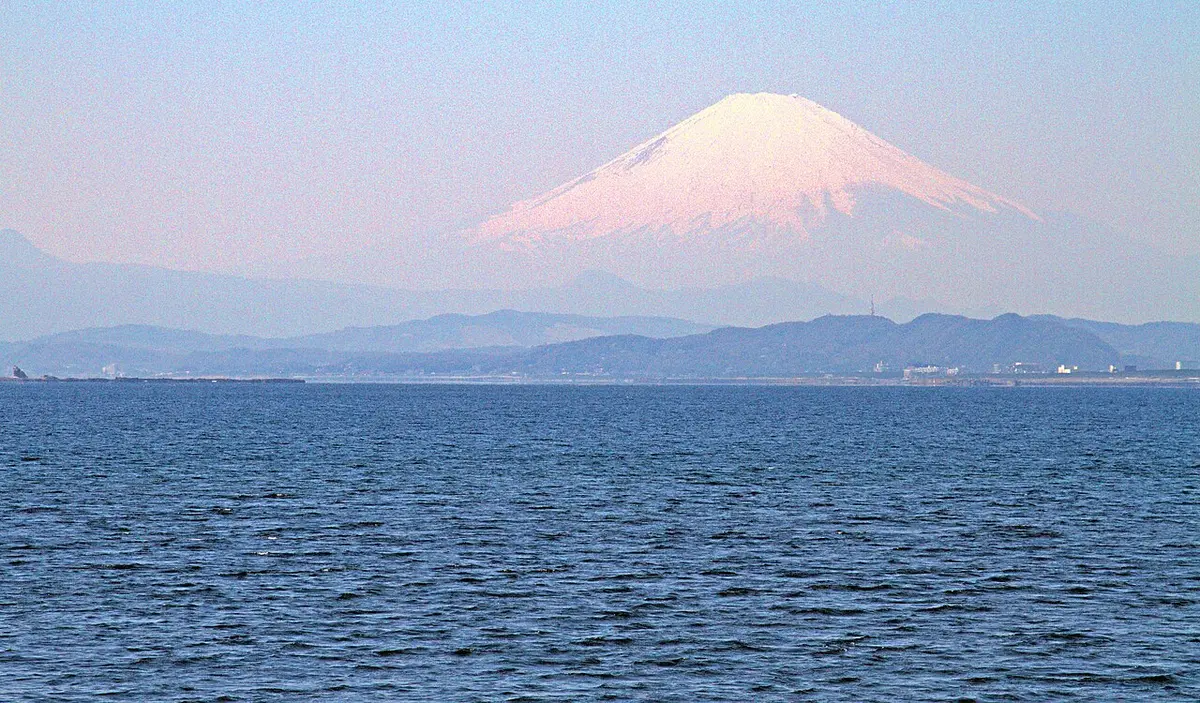
The Enoshima Benten Bridge is the walkway across from Katase. The current bridge, 389 m long, was finished in 1964 for the Tokyo Olympic sailing events held at Enoshima’s harbor. Before any bridge existed, pilgrims crossed on foot over the sandbar at low tide; the shrine’s guide quotes the medieval chronicle Azuma Kagami on this. From Odakyu Katase-Enoshima Station the start of the bridge is about 8 minutes on foot; the shrine puts the walk to the island end at 15 to 20 minutes. Look back from the middle on a clear morning: the coast curves away toward Kamakura, and Fuji sits to the west.
Fee freeLength 389 mFrom Katase-Enoshima Stn about 8 min on footFrom Enoden Enoshima Stn about 12 min on footMapOfficial site
The bronze torii and Benzaiten Nakamise street
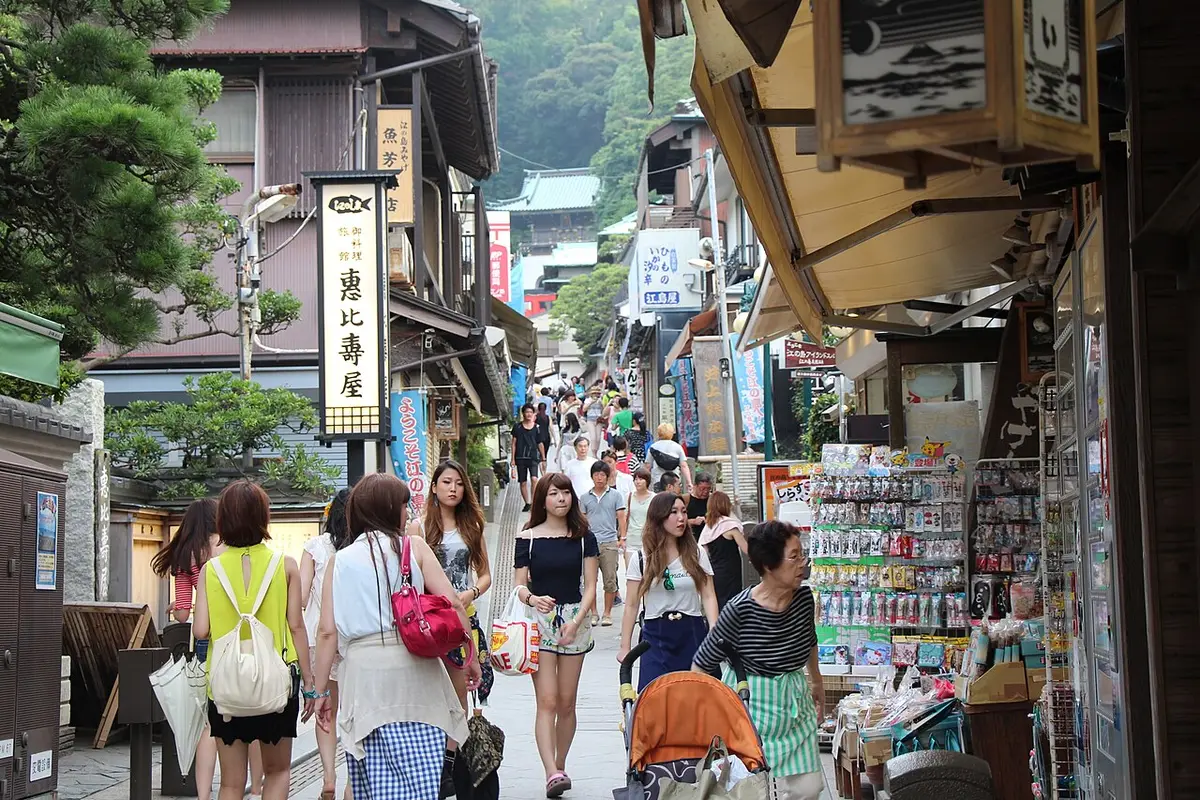
At the island end stands the bronze torii, first built in 1747 and rebuilt in 1821; the donors’ names are cut into the pillars. Through it runs Benzaiten Nakamise, the old pilgrim approach. The shrine notes that its width, about 2.75 m, has not changed since the Edo period, which is why it jams on weekends. Ryokan, seafood restaurants and snack shops line both sides, and our Kamakura food guide covers the local dishes worth ordering. The red torii at the top is 2 to 3 minutes from the bronze one. If you want photos in yukata or kimono, a kimono rental with hairstyling in Enoshima dresses you before the climb.
Fee freeBronze torii to red torii 2-3 min on footBuilt 1747, rebuilt 1821MapOfficial site
Escar or the stairs
At the red torii you choose. The Enoshima Escar is Japan’s first outdoor escalator, built in three sections: to the shrine’s Hetsumiya hall, on to Nakatsumiya, and up to the summit by the Samuel Cocking Garden. Enoden’s guide puts the ride at about 5 minutes against about 20 minutes on the stairs. It runs uphill only; everyone walks down. All three sections cost ¥500 (child ¥250), or ¥260 for the first section alone. The stairs are not hard for most people, but they are long and uneven, and the shrine halls sit along them, so walkers see more. With a stroller, knees that dislike steps or a short winter afternoon, the Escar is worth the money. It takes cash, cards, IC cards and PayPay.
Fee ¥500 all sections, ¥260 first sectionHours 8:50-19:05Ride about 5 min (stairs about 20)MapOfficial site
Enoshima Shrine: three halls and the Hoanden
Enoshima Shrine is three shrines spread up the island, each for one of three sister goddesses, and together they are one of Japan’s three great Benzaiten shrines.
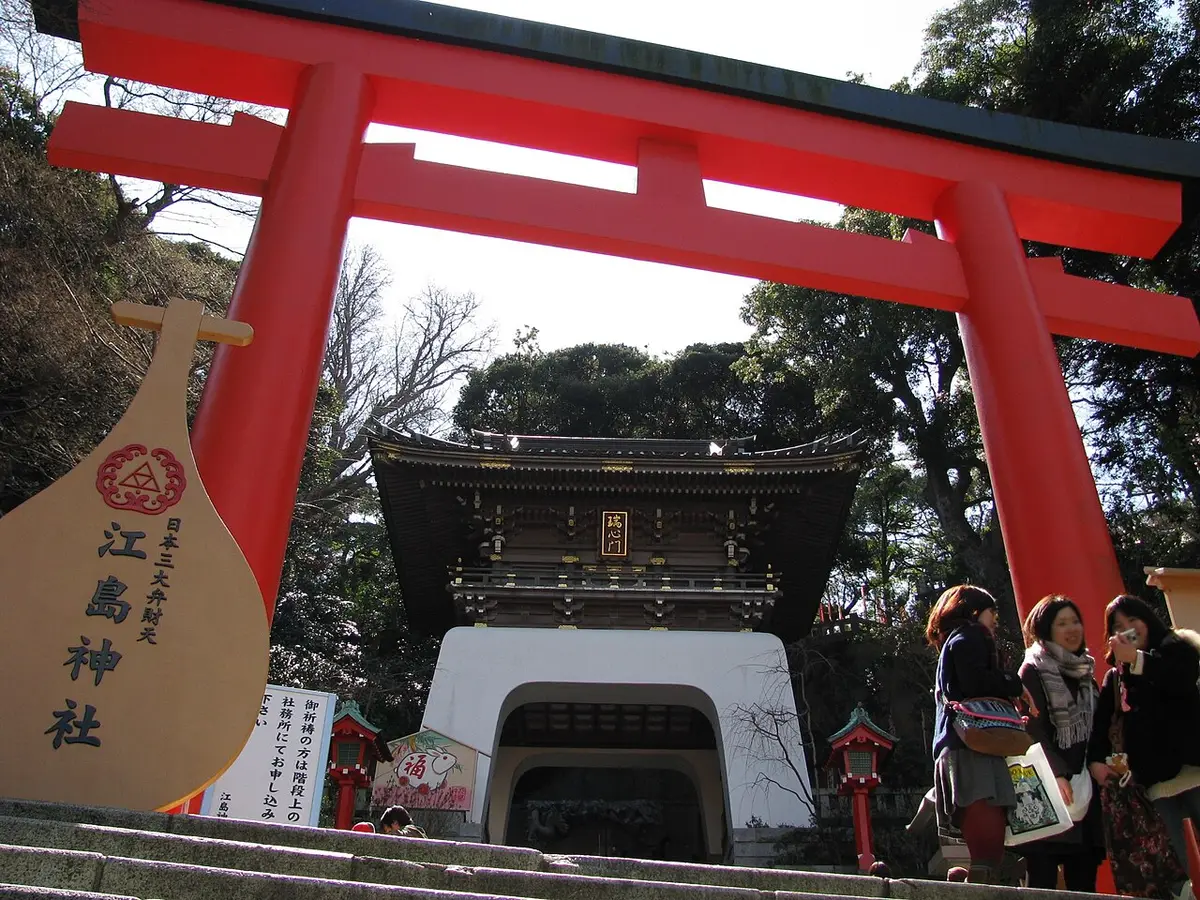
Hetsumiya, 3 to 5 minutes up the steps from the red torii through the Zuishinmon gate, was founded in 1206 by the shogun Minamoto no Sanetomo; the present hall dates from 1675. Prayers and charms are handled here. Beside it the octagonal Hoanden holds two Benzaiten statues, the eight-armed Happi Benzaiten, an Important Cultural Property, and the seated Myoon Benzaiten with her biwa lute. It is the only paid hall: ¥200 for adults, ¥100 for junior high and high school students, ¥50 for children.
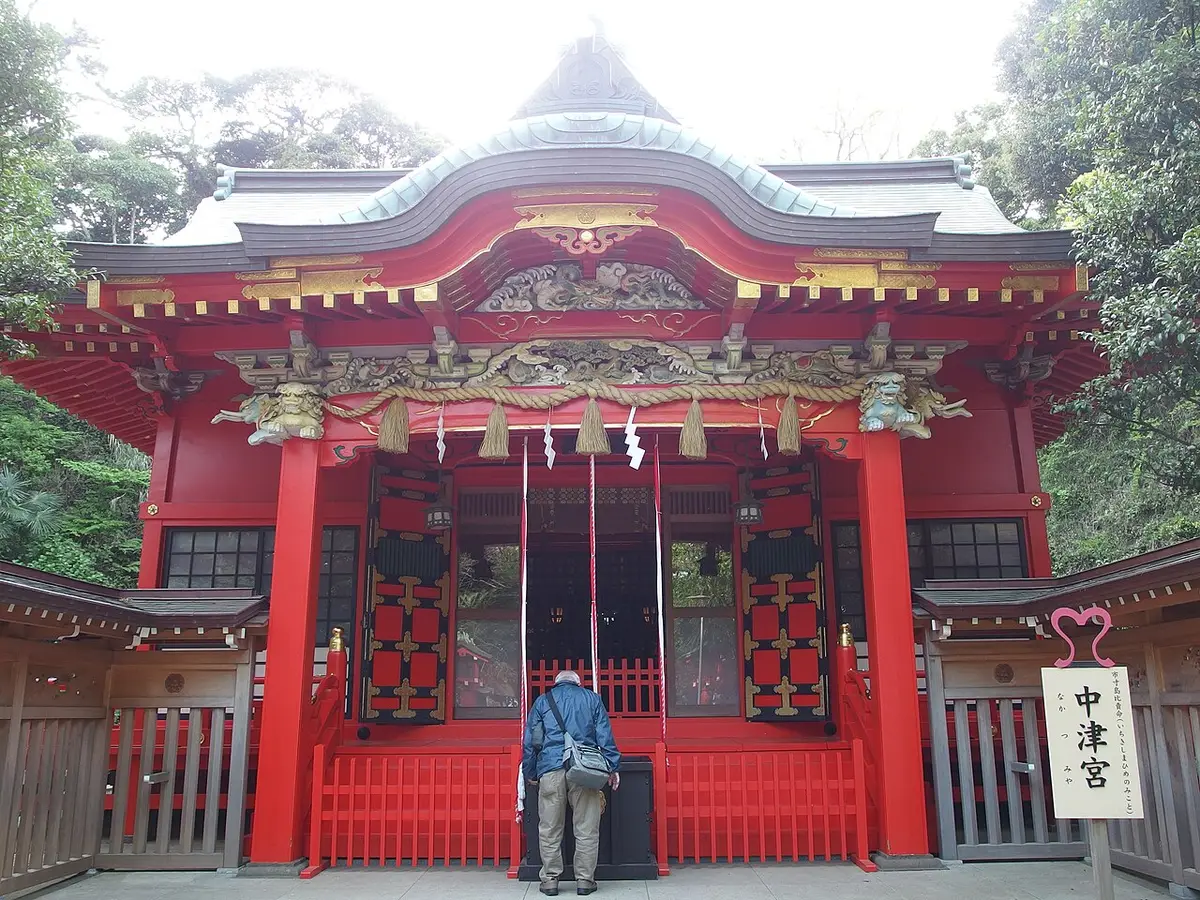
Nakatsumiya is about 5 minutes further. Its bright vermilion hall was rebuilt in 1689 and restored in 1996, and a pair of stone lanterns on its path was given by two Edo kabuki theaters, Ichimura-za and Nakamura-za.
Okutsumiya, about 10 minutes beyond Nakatsumiya on the far side of the island, was rebuilt in 1842. Look up in the worship hall for the “turtle that glares in eight directions” painted on the ceiling, and note the stone torii said to have been given by Minamoto no Yoritomo in 1182.
Fee grounds free; Hoanden ¥200Hoanden hours 8:30-16:30Office 8:30-17:00From the stations 15-23 min on footMapOfficial site
Samuel Cocking Garden
At the summit, the Samuel Cocking Garden began as the private garden of Samuel Cocking, an English trader who laid it out from 1882. The estate covered more than 10,000 m² and had a 660 m² greenhouse, which the operator says was the largest in Asia when it was built. Its brick foundations were found during the 2002 rebuild, and you can now look down into them through a glass floor. Today it is a public park with subtropical plants, seasonal flower beds, cafes and the base of the Sea Candle. Entry is free from 9:00 to 17:00. On evening-event days, staying after 17:00 costs ¥500 for adults (¥250 for children), and the illuminations are the reason to stay.
Fee free 9:00-17:00; ¥500 after 17:00 on event daysHours 9:00-20:00, last entry 19:30MapOfficial site
Enoshima Sea Candle
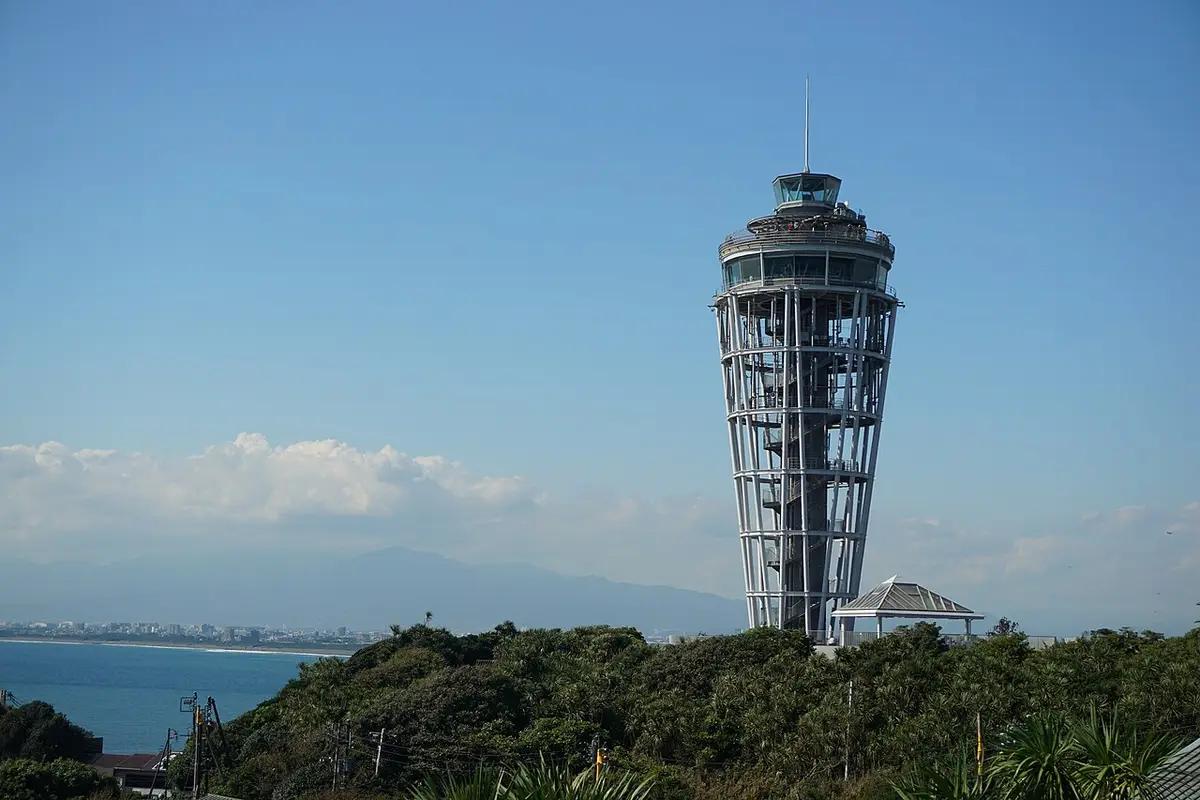
The Sea Candle is the island’s observation lighthouse. It stands 59.8 m to the tip of the lightning rod, 119.6 m above the sea. The glass deck is at 41.75 m, with an open-air deck above it. The first tower here, from 1951, was Japan’s first privately built lighthouse; the present one opened in April 2003 and took the Sea Candle name in 2010. On clear days the operator lists the Miura and Izu peninsulas, Tokyo Tower and Tokyo Skytree among the views, and the outdoor deck is where you see Fuji and the sunset together. Admission is ¥800 (child ¥400), or ¥1,100 as a set with the Escar. Klook sells that set bundled with the Odakyu trip from Shinjuku.
Fee ¥800, child ¥400Hours 9:00-20:00, last entry 19:30From Katase-Enoshima Stn 20 min on footMapOfficial site
Lovers’ Hill and the Ryuren bell
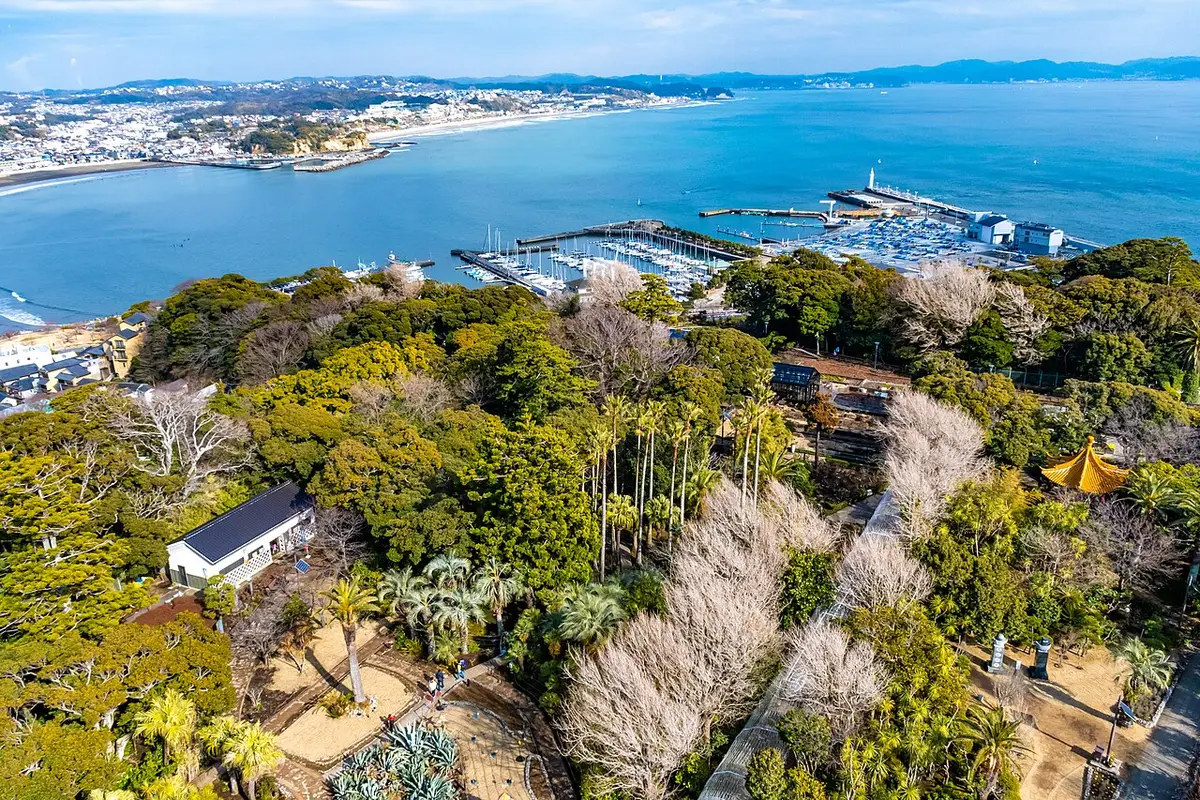
From the summit the path drops past Yamafutatsu, a notch where the ridge splits in two (7 to 8 minutes from Nakatsumiya), then runs along the island’s spine toward Okutsumiya. Just off it is Lovers’ Hill, where couples ring the Ryuren bell. It was built after the island’s founding legend, in which a heavenly maiden tames a five-headed dragon who falls in love with her, and the fence below is covered in padlocks. Fujisawa’s tourism office notes that Izu Oshima island is visible from here on clear days. Even if bells and locks are not your thing, the clifftop view south over Sagami Bay is worth the short detour.
Fee freeOpen always openNearby Okutsumiya, a short walkMapOfficial site
Chigogafuchi rock terrace
Steps from Okutsumiya lead down to Chigogafuchi, a flat rock terrace at the island’s southwest tip, raised by land uplift and cut by waves. It sits right under the cliffs and is known for sunsets behind Mount Fuji; Kanagawa lists it among its 50 finest views. Anglers fish from the rocks on weekends. Waves break across the edges, so keep back from the water and wear shoes with grip. The Fujisawa tourism association warns that you may not be allowed down onto the rocks for safety even when the sea looks calm, and it runs a live camera so you can check conditions before the walk.
Fee freeOpen weather permittingFrom Okutsumiya stairs down, on the way to IwayaMapOfficial site
Iwaya caves
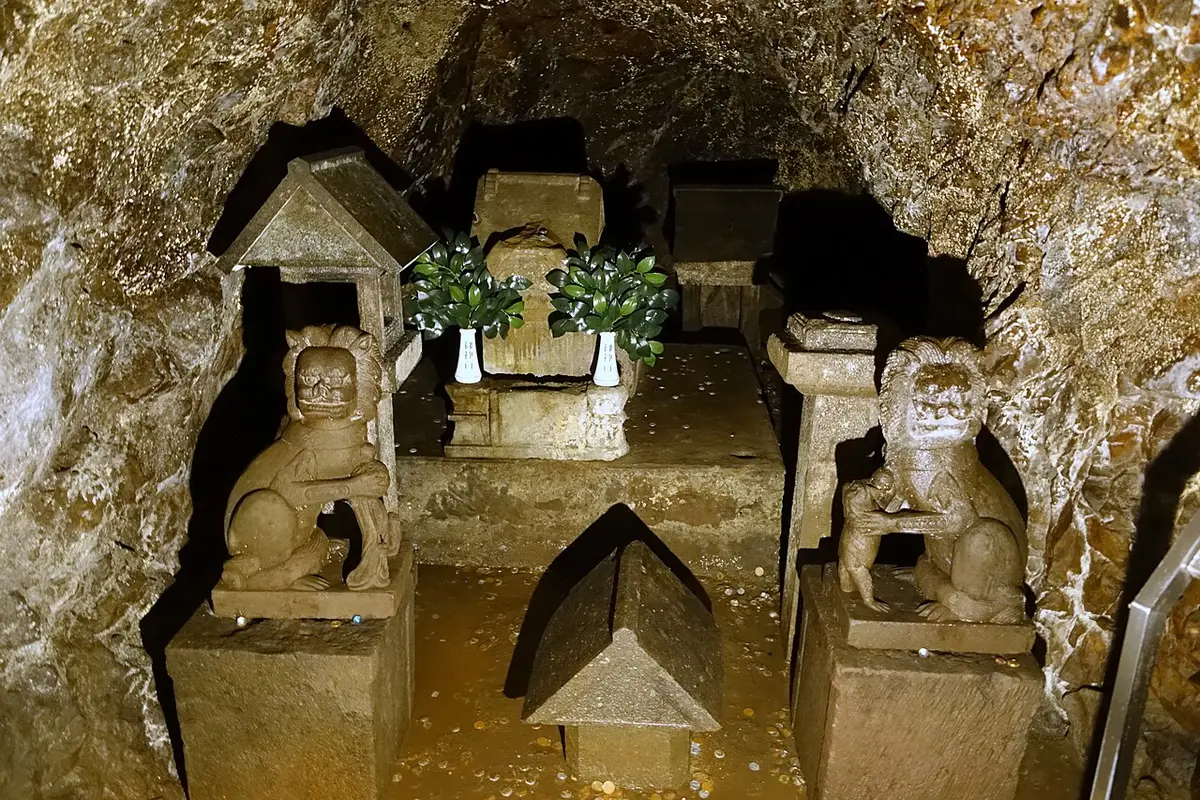
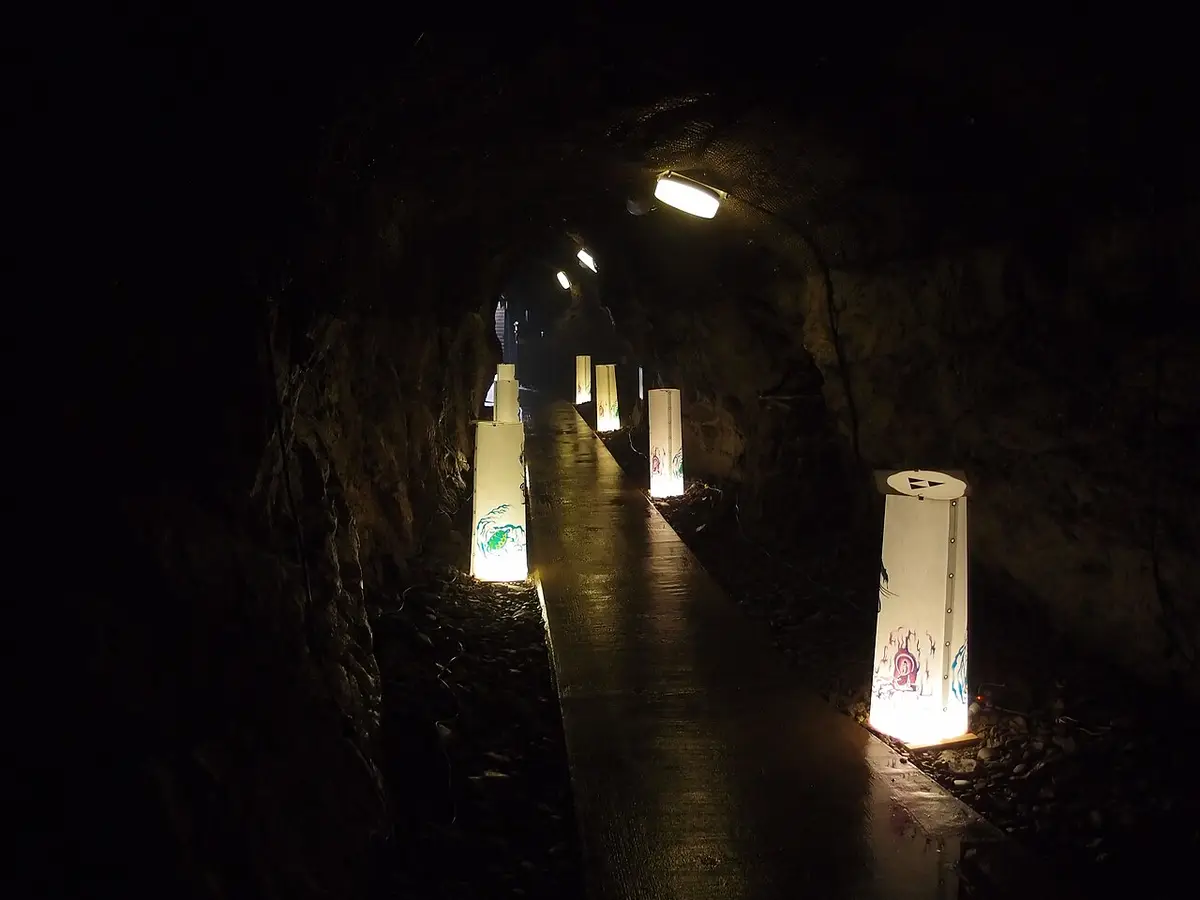
The Iwaya caves are the reason the island became holy. These sea caves, at the far end of a walkway along the cliff, are where Enoshima’s worship began; Kobo Daishi and Nichiren are said to have trained here, and Minamoto no Yoritomo is said to have prayed here in 1182. The first cave runs 152 m into the rock, past stone statues lit by candlelight; the second, 56 m deep, is linked to the dragon legend. The shrine’s guide puts it about 10 minutes on foot from Okutsumiya, all downhill, which means a climb back up afterwards unless you take the boat. Admission is ¥500 for adults and ¥200 for children. The caves can close in high seas.
Fee ¥500, child ¥200Hours 9:00-17:00, varies by seasonFrom Okutsumiya about 10 min on footMapOfficial site
Benten-maru boat back to the bridge
Instead of climbing back over the island, you can take the Benten-maru, a small boat between Chigogafuchi and Benten Bridge. The crossing takes about 6 minutes and costs ¥500 for adults and ¥200 for children aged 6 and over, cash only. It sails roughly 11:00 to 14:30 on weekdays and 10:30 to 14:30 on weekends and holidays, with no weekday sailings in December, January and February. Service is confirmed around 10:30 each day and stops in strong wind, high waves or very low tide. Swimsuits, wet clothes and sandy feet are not allowed on board. If it is not running, the walk back to the bridge takes the same route you came.
Fee ¥500, child ¥200, cash onlyHours about 10:30-14:30, weather permittingCrossing about 6 minMapOfficial site
On the mainland side: the aquarium and Katase beaches
Enoshima Aquarium
Back on the Katase shore, Enoshima Aquarium looks across to the island and Fuji. Enoden describes the dolphin show and the big tank with a swirling school of sardines as the highlights, and the jellyfish displays are the other draw. Adult admission is ¥2,800, high school students ¥1,800, junior high and elementary ¥1,300, and children 3 and over ¥900. Hours change through the year: 9:00 to 17:00 from late September to the end of November, 10:00 to 17:00 for most of December and from late January to February, last entry an hour before closing, and a maintenance closure in late January. An Enoshima Aquarium e-ticket lets you buy before the day. It is 3 minutes on foot from Katase-Enoshima Station.
Fee ¥2,800, child ¥900-1,800Hours 9:00 or 10:00 to 17:00, last entry 16:00From Katase-Enoshima Stn 3 min on footMapOfficial site
Katase East and West beaches
The bridge splits two beaches. Katase East Beach, on the Kamakura side, is the calmer, shallow one; Katase West Beach runs on toward Kugenuma with Fuji and the island in view. Both are 2 minutes on foot from Katase-Enoshima Station. Swimming is supervised only during the summer season, which in 2026 ran from July 1 to September 6 on the east beach and to September 13 on the west. Outside summer they are walking and surfing beaches. Season dates, rules and the Kamakura beaches are on our Kamakura beaches guide.
Fee freeSwimming season 2026 July 1 to Sept 6 (East), to Sept 13 (West)From Katase-Enoshima Stn 2 min on footMapOfficial site
Enoshima tickets: which combination saves money
Older guides mention the Enopass. Enoden has taken its Enopass page down, and the island’s operator now sells these combination tickets instead, at the Escar entrance, the Katase-Enoshima tourist office or online:
| Ticket | Includes | Adult | Child | Adult saving |
|---|---|---|---|---|
| Enoshima 1day | Escar, Sea Candle, garden, Iwaya | ¥1,550 | ¥700 | ¥250 on ¥1,800 |
| Sea Candle set | Escar, Sea Candle, garden | ¥1,100 | ¥550 | ¥200 on ¥1,300 |
| Iwaya and Sea Candle set | Sea Candle, garden, Iwaya (no Escar) | ¥1,110 | ¥500 | ¥190 on ¥1,300 |
| Enoshima-Enosui Area Passport | Escar, Sea Candle, garden, Iwaya, aquarium | ¥3,940 | ¥1,810 (elementary) | ¥660 on ¥4,600 |
How to pick:
- Escar, tower and caves: the Enoshima 1day. For a child, it costs ¥700 against ¥850 separately.
- Stairs, tower and caves: the Iwaya and Sea Candle set.
- Escar and tower, no caves: the Sea Candle set.
- Island plus aquarium: the Area Passport, sold online as the Enoshima Island All-Access Pass. High school students pay ¥2,940 and junior high ¥2,640.
- Shrine and Nakamise only: no ticket. The walk is free.
Transport is separate. The Enoshima-Kamakura Freepass covers trains, not island sights, and our trip cost calculator adds both for your day.
Sunset on Enoshima, month by month
Sunset is the island’s best hour. The rock terrace and the Sea Candle’s outdoor deck face west across Sagami Bay toward Fuji. Times below are for the 15th of each month in 2027, calculated for Enoshima by the National Astronomical Observatory of Japan.
| Month | Sunset | Month | Sunset |
|---|---|---|---|
| January | 16:52 | July | 18:58 |
| February | 17:24 | August | 18:32 |
| March | 17:49 | September | 17:50 |
| April | 18:14 | October | 17:08 |
| May | 18:39 | November | 16:36 |
| June | 18:58 | December | 16:31 |
What this means on the ground:
- Sea Candle in every month. Last entry is 19:30, after sunset all year, so you can watch from the deck in June and July too.
- Iwaya first in winter. The caves’ listed hours end at 17:00 and change by season. From November to January, sunset falls around 16:30 to 16:50, so see the caves first and walk up to Chigogafuchi for the sunset.
- Evening events. From early December to the end of February the garden hosts the Shonan no Hoseki illumination (December 1, 2026 to February 28, 2027 this winter). Shonan Candle runs early October to early November, Enoshima Toro early August to mid September and the Enoshima Art Festival early April to early June. On these days the garden charges after 17:00.
- Clear air. Fuji views are most likely on cold, dry winter days. The Kamakura calendar and best time to visit pages show the seasons side by side.
Getting to Enoshima: Enoden, Odakyu or Shonan Monorail
Three lines end near the bridge, at three different stations.
| Line | Route | Time | Adult fare (IC) | Walk to Benten Bridge |
|---|---|---|---|---|
| Enoden | Kamakura to Enoshima | 24 min | ¥260 | about 12 min |
| Enoden | Fujisawa to Enoshima | 9 min | ¥220 | about 12 min |
| Odakyu | Shinjuku to Katase-Enoshima (2 changes) | 71 min | ¥649 | about 8 min |
| Shonan Monorail | Ofuna to Shonan-Enoshima | 14 min | ¥340 | 15-23 min to the shrine |
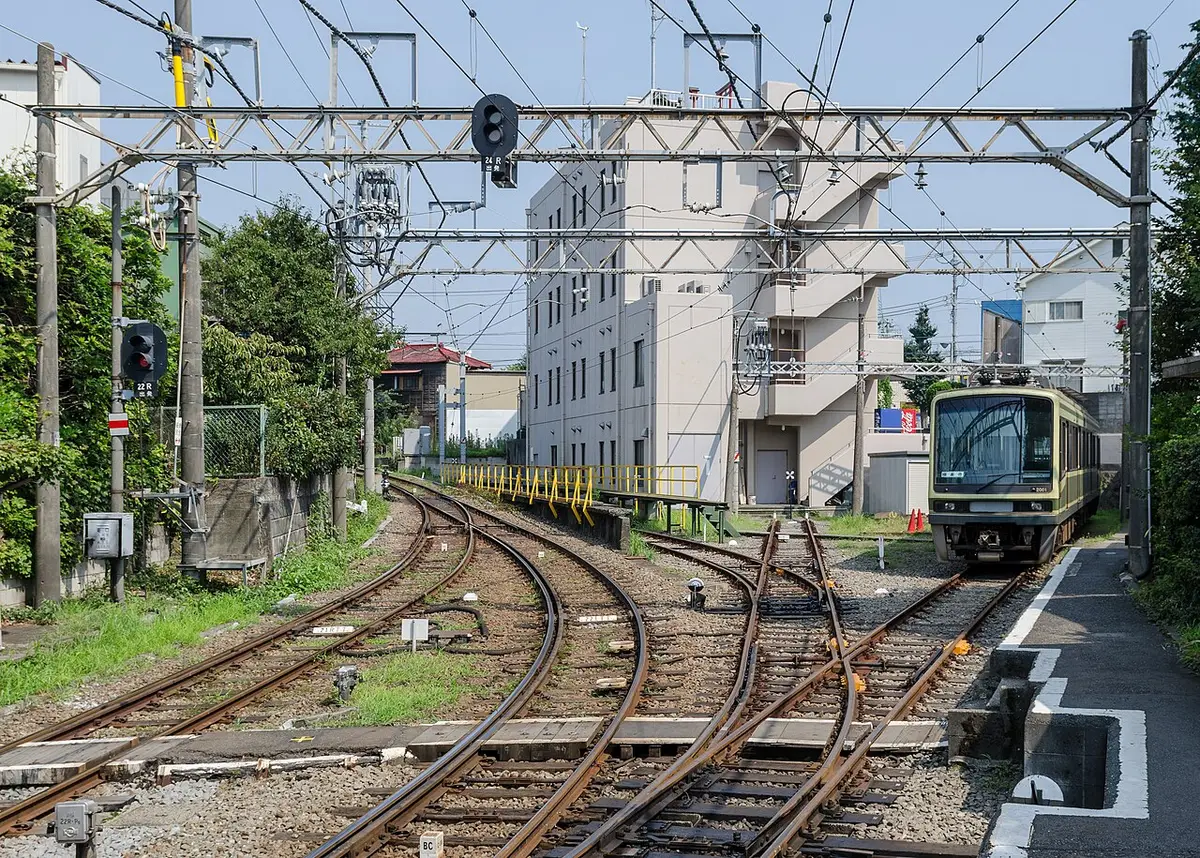
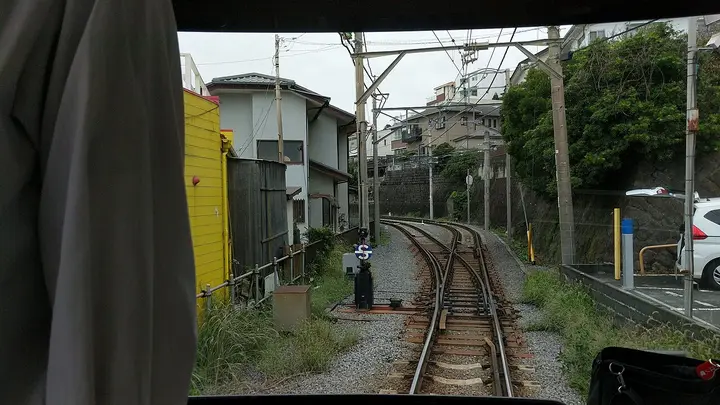
- From Kamakura or the Great Buddha: take the Enoden. It runs along the coast past Kamakura-kokomae, and the ride is part of the day.
- From Shinjuku: the Odakyu Line is cheaper than JR via Kamakura and drops you closest to the bridge. A direct Romancecar between Katase-Enoshima and Shinjuku costs ¥1,399 including the limited express charge. If you also want Kamakura, the Enoshima-Kamakura Freepass covers the Odakyu return to Shinjuku and the whole Enoden line for ¥1,640 from Shinjuku.
- From Tokyo Station or Yokohama: JR to Kamakura (¥1,034 and 56 minutes from Tokyo) and then the Enoden, or JR to Ofuna and the Shonan Monorail, a suspended monorail over the hills.
Full routes from every start point are in how to get to Kamakura, and the planner on the home page times the legs for your date.
Enoshima itineraries
Half-day route (about 4 hours)
- Arrive early. Odakyu to Katase-Enoshima or Enoden to Enoshima. Cross Benten Bridge before 10:00, while Nakamise is still quiet.
- Climb. Escar to Hetsumiya, or 3 to 5 minutes of stairs from the red torii. Visit the Hoanden (¥200).
- Shrine halls. Walk on to Nakatsumiya (about 5 minutes) and up to the Samuel Cocking Garden.
- Tower. Sea Candle for the view. Allow 30 to 45 minutes for garden and tower.
- Far side. Yamafutatsu, Lovers’ Hill and Okutsumiya (about 10 minutes from Nakatsumiya).
- Down to the sea. Chigogafuchi and the Iwaya caves (about 10 minutes from Okutsumiya).
- Back. Benten-maru to the bridge if it is sailing, then lunch on Nakamise or the aquarium in the afternoon.
Ticket: the Enoshima 1day at ¥1,550. With the Enoden from Kamakura both ways the day costs ¥2,070 per adult before food; from Shinjuku on Odakyu singles it is ¥2,848.
Sunset route
- Start about three hours before sunset (13:30 in December, 16:00 in June).
- Caves first. Cross the bridge and climb, then go straight over the top to the Iwaya caves while they are open.
- Rock terrace. Climb back up to Chigogafuchi for the last half hour of light.
- Tower after dark. Walk up to the Sea Candle; it is open until 20:00 and the coast lights come on after sunset.
- Down the stairs past the lit shrine gates and out over the bridge.
Kamakura and Enoshima in one day
Most visitors pair the island with Kamakura. Do the Great Buddha and Hasedera in the morning, ride the Enoden west, and finish on Enoshima for sunset. The Kamakura itinerary lays out that day leg by leg, and the day trip from Tokyo compares the train options. If you would rather not plan, a guided train trip from Tokyo with the Great Buddha and Enoshima meets at Tokyo or Shinjuku Station and includes the Enoden fare. The Kamakura and Enoshima day tour with a train ride goes by bus with a stop at the Kamakura-kokomae crossing. The Kamakura and Enoshima day trip with temples and tea is a small group from Shinjuku with the Freepass included. On a tighter budget, the Kamakura and Enoshima one-day bus tour runs from Shinjuku, and the Kamakura and Enoshima day tour from Tokyo adds Hasedera and Tsurugaoka Hachimangu with an English-speaking guide. Every option is compared on Kamakura tours.
Enoshima for different days
Enoshima or Kamakura, if you can only pick one
Kamakura is temples, Zen gardens and the Great Buddha; Enoshima is a sea island with one long shrine walk, caves and a lighthouse. If your interest is history and gardens, choose Kamakura and see the things to do in Kamakura. If you want the sea, a sunset and a single walk with no planning, choose Enoshima. Most people do both: the two are 24 minutes apart on the Enoden for ¥260, so the real question is only which end of the day each gets. Temples close earlier than the Sea Candle, so Kamakura in the morning and Enoshima in the evening is the order that wastes the least time.
Ninety minutes only
Cross Benten Bridge, walk Nakamise to the red torii, ride the first Escar section (¥260) to Hetsumiya, visit the Hoanden and walk back down. That covers the bridge, the shop street and the first shrine hall. Skip the far side: the caves sit at the end of the island, about 10 minutes beyond Okutsumiya and all stairs.
With children
The Escar, the Sea Candle and the aquarium are the family hits, and children’s tickets are half price or less: ¥250 for the Escar, ¥400 for the tower, ¥200 for the caves, ¥900 for the aquarium from age 3. The Benten-maru boat back from the caves costs ¥200 for children from 6 and saves small legs the climb. Plan the island first and the aquarium after lunch, since the aquarium sits next to Katase-Enoshima Station for the trip home.
On a rainy day
Rain closes nothing on the shrine path, but the stairs get slippery and the views vanish. Shift the weight of the day to the aquarium, which is indoors, and to the Sea Candle’s glass deck. Leave the rock terrace and the boat for another day: both depend on calm seas. If the forecast is poor all day, Kamakura’s temple halls and museums give more cover; plan that day with the Kamakura itinerary.
Practical tips
When to go. Enoshima is busiest in summer and on holidays. Fujisawa City counted 3,531,010 visits in August 2025, its peak month, against 1,151,214 in February. Golden Week 2025 brought 494,000 visitors to the Katase-Enoshima area. Weekday mornings are calmest at any time of year.
Steps. Even with the Escar, the walk from the summit to the caves and back is all stairs. Strollers are hard beyond the summit garden; our Kamakura with kids page covers family routes.
Weather. The caves, the rock terrace and the boat all depend on the sea. Check the Iwaya live camera and the Fujisawa tourism homepage before you set off.
Cost line. The shrine and the walk are free. A typical adult day costs ¥1,550 for the 1day ticket, plus trains, food and ¥200 if you want the Hoanden. Compare passes on the Freepass page.
Season. The island is a year-round walk. Winter brings the clearest Fuji views and the Shonan no Hoseki lights, and our Kamakura in winter page lists what else is on.
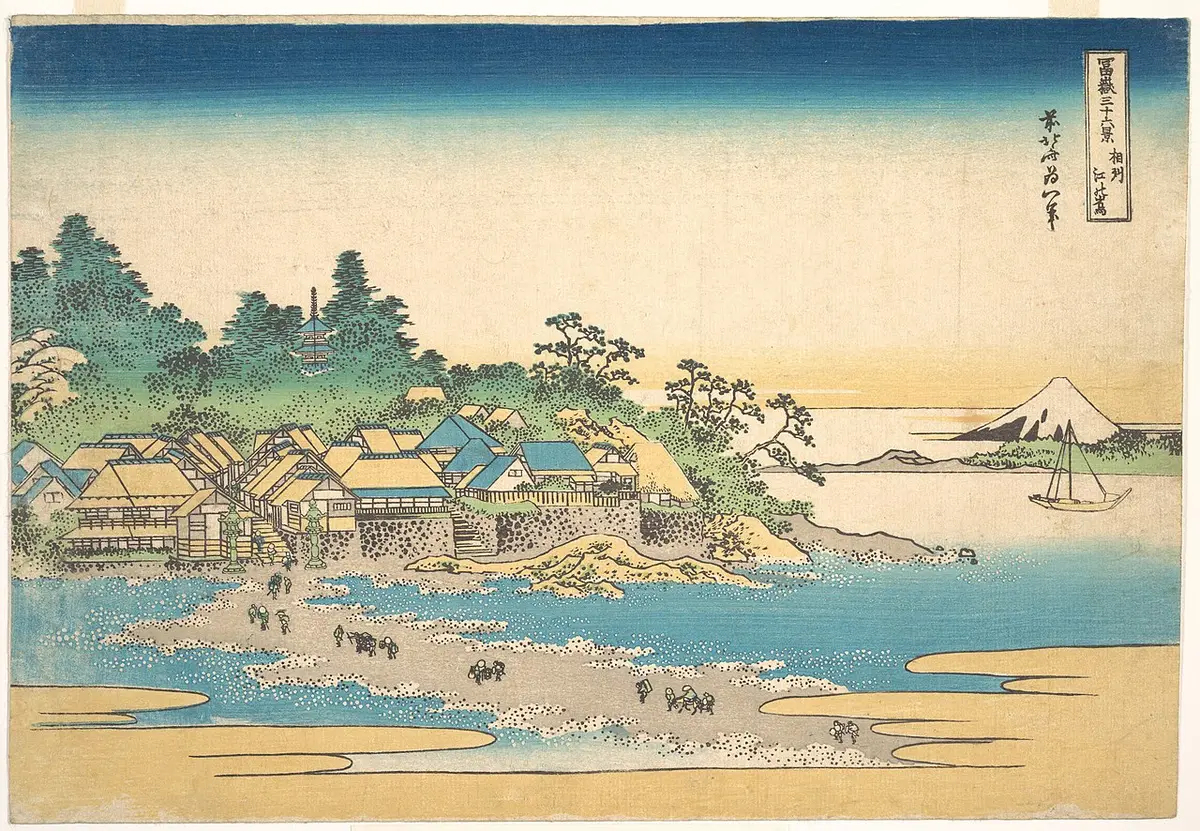
Staying overnight on Enoshima
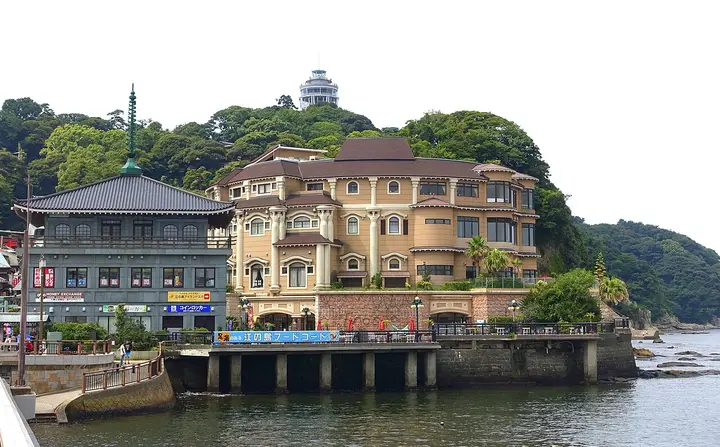
Staying lets you see the island before the day-trippers and after the last train crowd. Iwamotoro is a ryokan right at the end of Benten Bridge that traces its history to the Kamakura period. Enoshima Hotel’s Island Spa building sits at the island entrance, about 3 minutes on foot from Katase East Beach according to its listing. More options on Katase and in Fujisawa are in where to stay in Enoshima.
If you only have one day in the area, our things to do in Kamakura guide covers the temples on the other end of the Enoden, and the Kamakura travel guide ties every page together.
Questions people ask
How long do you need on Enoshima?
Plan three to four hours for the island route: Benten Bridge, Nakamise street, the three shrine halls, the Sea Candle, Lovers' Hill, the rock terrace and the Iwaya caves. Add about two hours for Enoshima Aquarium on the mainland side, and stay later if you want the sunset from the rock terrace or the Sea Candle.
Is the Enoshima Escar worth it?
It saves the climb. The Escar takes about 5 minutes to the shrine against about 20 minutes on the stairs, and it only runs uphill. All three sections cost ¥500 for adults. If you also want the Sea Candle, the set ticket at ¥1,100 is ¥200 cheaper than buying both separately.
Can you see Mount Fuji from Enoshima?
Yes, on clear days. The Sea Candle's outdoor deck and the Chigogafuchi rock terrace face west across Sagami Bay toward Fuji, and the Sea Candle's operator describes seeing Fuji and the sunset together from the deck. Clear, dry winter days give the best chance.
How do I get to Enoshima from Tokyo?
From Shinjuku, the Odakyu Line reaches Katase-Enoshima in about 71 minutes for ¥649 with an IC card, with changes at Sagami-Ono and Fujisawa. From Tokyo Station, ride JR to Kamakura and take the Enoden to Enoshima Station, ¥260 and 24 minutes. The Shonan Monorail from Ofuna is the third option.
Are the Iwaya caves open every day?
The caves open 9:00 to 17:00, with hours that change by season, and admission is ¥500 for adults. Fujisawa City's tourism site posts the day's hours. In rough seas the path and the boat back can be closed, so check before you walk to the far end of the island.
Is the Enoshima 1day ticket worth buying?
Only if you plan to use the Escar, the Sea Candle and the Iwaya caves. Bought separately they cost ¥1,800 for an adult, so the ¥1,550 ticket saves ¥250. If you climb the stairs instead, the Iwaya and Sea Candle set at ¥1,110 is the better buy.
Read next


Sources (20)
- Enoshima Shrine (official): precinct guide and walking times (Japanese)
- Enoshima Shrine (official): access (Japanese)
- Enoshima Sea Candle and Samuel Cocking Garden: fees and tickets (Japanese)
- Enoshima Sea Candle: opening hours (Japanese)
- Enoshima Sea Candle: about the tower and garden (Japanese)
- Enoshima Escar (Japanese)
- Fujisawa City Tourist Association: Iwaya caves (Japanese)
- Fujisawa City Tourist Association: Hoanden (Japanese)
- Fujisawa City Tourist Association: Lovers' Hill and Ryuren bell (Japanese)
- Fujisawa City Tourist Association: Chigogafuchi (Japanese)
- Fujisawa City Tourist Association: Benten-maru boat (Japanese)
- Fujisawa City Tourist Association: Iwaya live camera
- Enoshima Aquarium (official): hours and fees (Japanese)
- Enoden (official, English): tourist attractions and walking times
- Enoden: fares between stations
- Odakyu: Enoshima-Kamakura Freepass
- JR East route search: Shinjuku to Katase-Enoshima
- Shonan Monorail: fares (Japanese)
- National Astronomical Observatory of Japan: sunrise and sunset calculator (Japanese)
- Fujisawa City Tourist Association: tourism statistics (Japanese)