Getting there
How to get to Kamakura from Tokyo
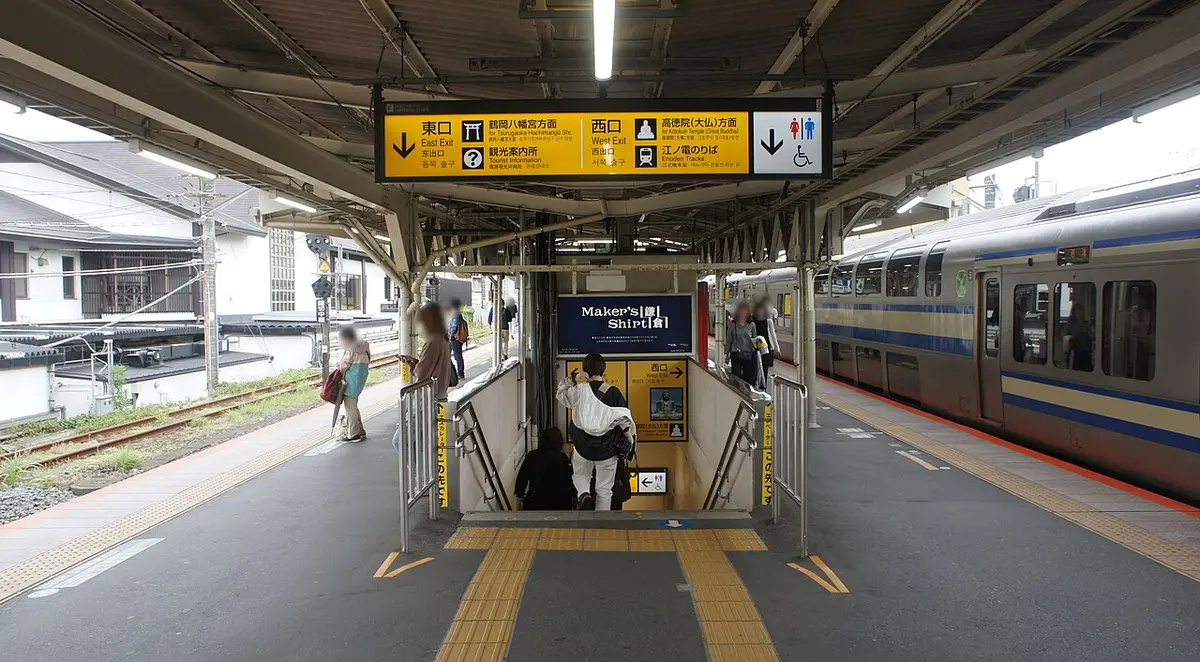
Table of contents
- Every start point at a glance
- From Tokyo Station
- From Shinjuku
- From Shibuya
- From Shinagawa
- From Yokohama
- From Haneda Airport
- From Narita Airport
- From Enoshima and Fujisawa
- The Odakyu option and the Freepass
- Green Car: is it worth it?
- Kamakura or Kita-Kamakura: which station?
- IC cards, contactless cards and the Enoden
- Getting back to Tokyo
- Which route fits your day
- Before you go
The quickest way from Tokyo to Kamakura is the JR Yokosuka Line from Tokyo Station: one train, no change, 56 minutes and ¥1,034 with an IC card. From Shinjuku and Shibuya, the JR Shonan-Shinjuku Line does the same trip for the same fare if you board a train for Zushi. Shinagawa is 46 minutes away and Yokohama only 24.
Two choices matter more than the line. First, which station: Kamakura for the shrine, Komachi-dori and the Enoden, or Kita-Kamakura for the Zen temples. Second, whether your day includes Enoshima, because then the Odakyu Line and the Enoshima-Kamakura Freepass can beat JR. This page covers every common start point, with minutes and fares, so you can pick before you reach the platform.
Every start point at a glance
Times below are for a weekday mid-morning departure from the JR East route search. Fares are the IC card fares (Suica, PASMO and other transport IC cards); JR East shows one fare per route and marks it for IC cards.
| From | Line | Change | Minutes | IC fare |
|---|---|---|---|---|
| Tokyo Station | JR Yokosuka Line | none | 56 | ¥1,034 |
| Shinjuku | JR Shonan-Shinjuku Line, train for Zushi | none | 58 | ¥1,034 |
| Shibuya | JR Shonan-Shinjuku Line, train for Zushi | none | 53 | ¥1,034 |
| Shibuya | Tokyu Toyoko Line, then JR from Yokohama | 1 | 65 | ¥749 |
| Shinagawa | JR Yokosuka Line | none | 46 | ¥803 |
| Yokohama | JR Yokosuka Line | none | 24 | ¥440 |
| Haneda Airport T1-2 | Keikyu Line, then JR from Yokohama | 2 | 54 | ¥837 |
| Narita Airport T2-3 | Narita Express, then JR from Shinagawa | 1 | 126 | ¥4,150 |
| Narita Airport T2-3 | Keisei and Toei lines, then JR | 2 | 128 | ¥2,316 |
| Shinjuku to Enoshima | Odakyu Line to Katase-Enoshima | 1 | 71 | ¥649 |
| Fujisawa | Enoden, full line | none | 37 | ¥310 |
| Tokyo to Kita-Kamakura | JR Yokosuka Line | none | 53 | ¥902 |
Fares are per adult, one way. For a round trip, double them: Tokyo Station and back is ¥2,068, Shinagawa and back ¥1,606, Yokohama and back ¥880. The trip cost calculator adds temples and the Enoden on top, and the day trip guide turns these trains into a timed day.

From Tokyo Station
The JR Yokosuka Line starts at Tokyo Station and runs south through Shimbashi, Shinagawa and Yokohama to Ofuna, Kita-Kamakura and Kamakura. The train in the sample search is signed for Zushi, the next stops after Kamakura. The thing to check on the platform is the line name: Yokosuka Line, not Tokaido Line. Both leave Tokyo for Yokohama, but only the Yokosuka Line goes to Kamakura.
The sample trip leaves Tokyo at 10:04 and reaches Kamakura at 11:00, 12 stops and 56 minutes. The next departure, at 10:11, takes 55 minutes. The IC fare is ¥1,034. If you are staying near Tokyo Station, Ginza or Nihonbashi, this is the simplest way to reach Kamakura and there is nothing to gain from a transfer.
If you plan to start with the temples of Kita-Kamakura, stay on the same train one stop less: Tokyo to Kita-Kamakura is ¥902 and 53 minutes. From there you can walk south to Kamakura and take the Enoden from Kamakura Station later in the day.
Yokosuka Line trains carry Green Cars (double-deck first-class cars). See the Green Car section for prices.
From Shinjuku
From Shinjuku, take the JR Shonan-Shinjuku Line. The sample trip leaves at 10:15 and reaches Kamakura at 11:14: 52 minutes to Ofuna, then 6 more minutes to Kamakura on the same train, ¥1,034 with an IC card. The train is signed for Zushi. At Ofuna the line name changes to the Yokosuka Line, but you stay in your seat: JR East’s route search shows it as one through train with no transfer.
If your day is Enoshima first and Kamakura second, Shinjuku is also the start of the Odakyu Line, which runs to Katase-Enoshima, a short walk from the bridge to the island. That trip takes 71 minutes with one change and costs ¥649. The Odakyu section below compares it with JR.
From Shibuya
Shibuya sits on the same Shonan-Shinjuku Line, one stop after Shinjuku. Three ways stood out on the sample search:
- Direct train for Zushi: 10:21 to 11:14, 53 minutes, no change, ¥1,034.
- Rapid for Odawara plus a change: 10:06 to 11:00, 54 minutes, ¥1,034. You ride the Rapid part of the way and change to a Yokosuka Line train for Zushi. Faster to leave, but only because it departed first; on board it is no quicker.
- Tokyu Toyoko Line to Yokohama, then JR: 10:09 to 11:14, 65 minutes, ¥749 (¥309 on the Tokyu Toyoko Line plus ¥440 from Yokohama on JR). This is the cheapest way from Shibuya by ¥285 one way, and the Tokyu Limited Express is a good option if the next direct JR train is a long wait.
For the Tokyu route you leave the Tokyu gates at Yokohama and enter the JR gates, which IC cards handle without any ticket buying.
From Shinagawa
Shinagawa is on the Yokosuka Line, so the trip is the same as from Tokyo Station, just 10 minutes shorter. The sample train leaves Shinagawa at 10:14 and reaches Kamakura at 11:00: 46 minutes, ¥803, no change. Shinagawa is also where travelers from Narita on the Narita Express, and many shinkansen travelers coming from the west, change for Kamakura.
From Yokohama
From Yokohama Station, Kamakura is 24 minutes away on the Yokosuka Line and costs ¥440. The sample leaves at 10:00 and arrives at 10:24; the 10:37 takes 23 minutes. The Shonan-Shinjuku Line trains for Zushi also stop at Yokohama and continue to Kamakura, so either line works as long as the train is bound for Zushi.
Staying in Yokohama is a good way to cut the cost of a Kamakura day: a round trip is ¥880, under half of the Tokyo fare.
From Haneda Airport
Haneda is closer to Kamakura than central Tokyo is. From Haneda Airport Terminal 1-2 station, the sample route takes the Keikyu Airport Line to Keikyu-Kamata, the Keikyu Main Line to Yokohama, and the JR Yokosuka Line from Yokohama to Kamakura: 10:06 to 11:00, 54 minutes, two changes, ¥837 with an IC card. A 10:12 departure with one change reaches Kamakura at 11:14.
If you land without an IC card, you can buy one at the airport or order a Suica IC card on Klook for pickup at an airport counter before you fly. Tapping in and out on Keikyu, JR and the Enoden saves buying a paper ticket at each change.
There is no airport bus to Kamakura itself. Haneda Airport’s bus list shows the Keikyu limousine bus to Ofuna and Fujisawa as suspended, so the train is the way in, even with luggage.
From Narita Airport
Narita is on the far side of Tokyo, so plan on about two hours. JR East’s search listed two sensible routes from Narita Airport Terminal 2-3:
- Narita Express to Shinagawa, then the Yokosuka Line: the N’EX leaves at 10:18 and reaches Shinagawa at 11:23, then the Yokosuka Line arrives in Kamakura at 12:24. That is 126 minutes and ¥4,150 including the N’EX limited express charge, with one change and reserved seats for most of the way.
- Keisei and Toei lines, then JR: 10:06 to 12:14, 128 minutes, ¥2,316, with two changes. It is cheaper by ¥1,834 but involves more platform changes with luggage.
If you land in the evening, consider a night in Tokyo or Yokohama first and travel to Kamakura in the morning, when the first temples open.
From Enoshima and Fujisawa
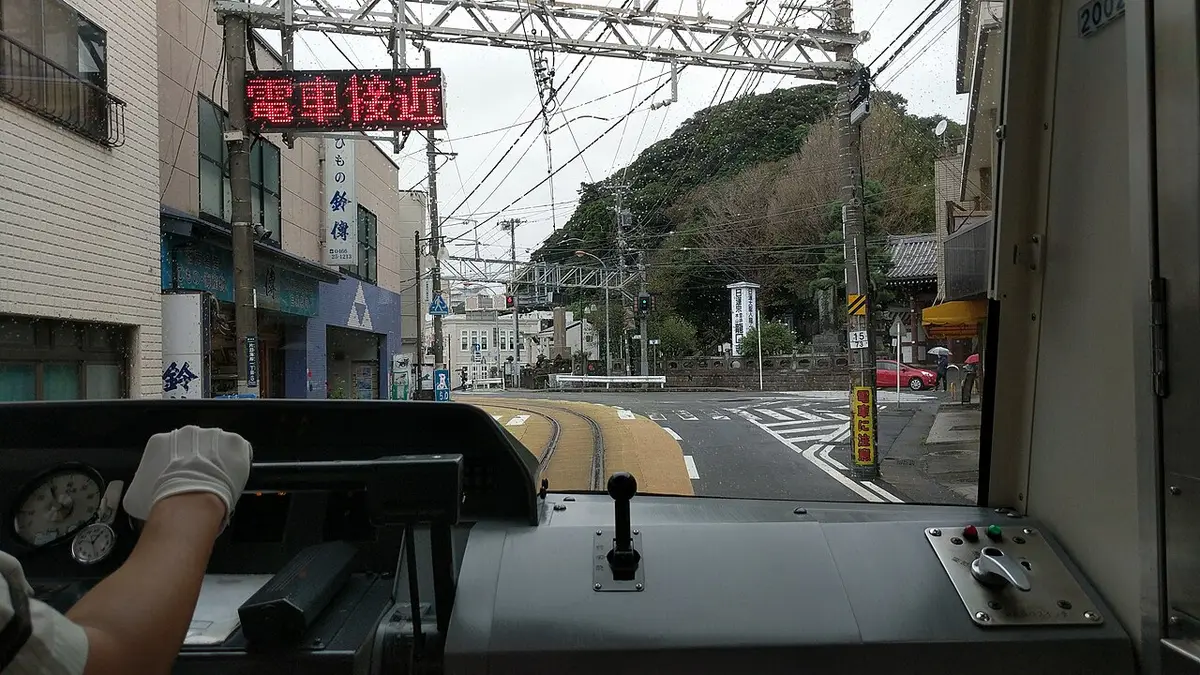
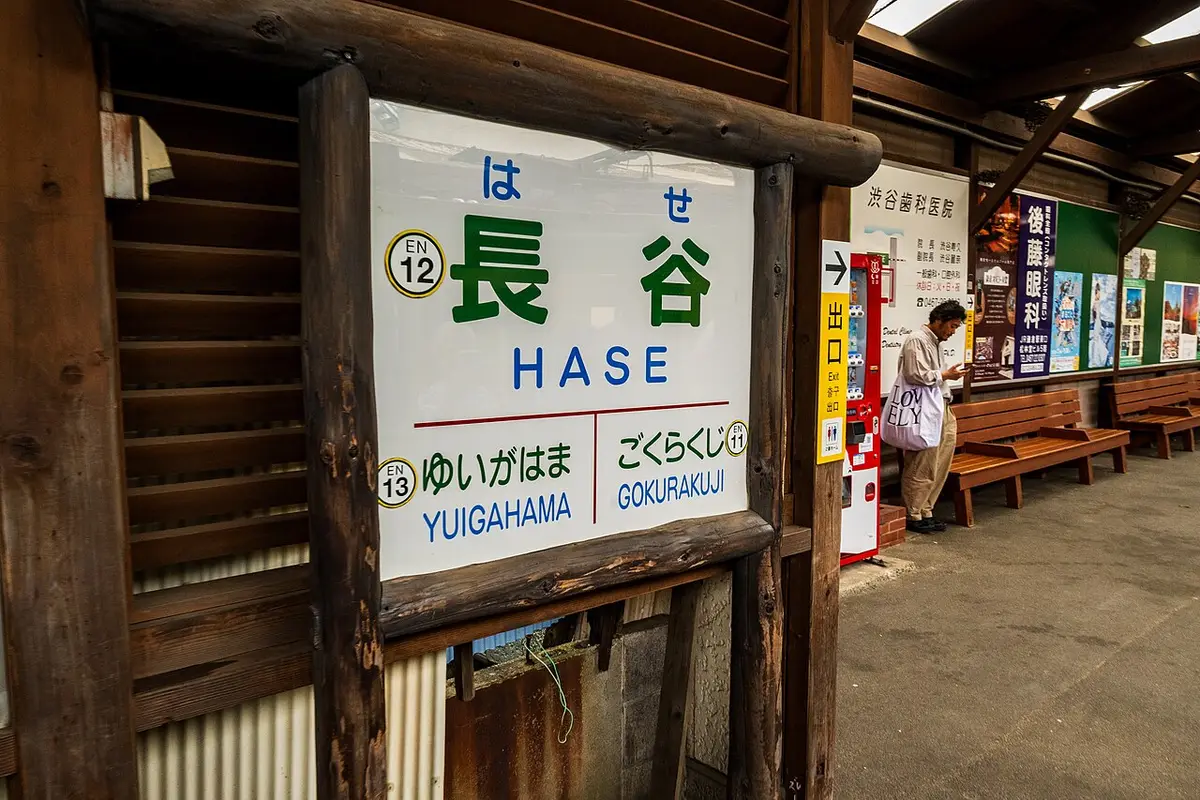
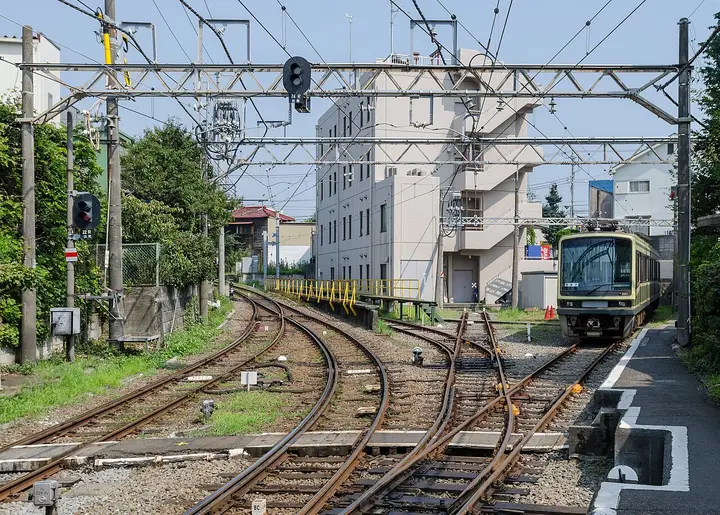
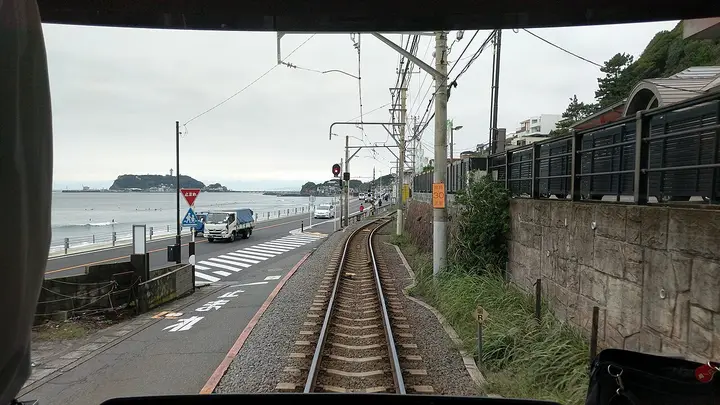
If you sleep near Enoshima or Fujisawa, Kamakura is a ride on the Enoden, the small coastal line that links them. From Enoden Fujisawa Station to Kamakura Station takes 37 minutes and costs ¥310 for the full line (Enoden fare table). From Enoshima Station it is 24 minutes and ¥260; from Hase, the stop for the Great Buddha and Hasedera, Kamakura is only 4 minutes and ¥200 away. Trains leave Kamakura toward Fujisawa every 14 minutes during the day, from 5:20 to the last train at 23:38 (Kamakura timetable).
From Ofuna, the Shonan Monorail runs to Shonan-Enoshima Station in 14 minutes for ¥340 (¥170 for a child). It suits a route that comes from Yokohama on JR and wants to see Enoshima first, then ride the Enoden to Kamakura. Our Enoden guide has every station, the crossing near Kamakura-kokomae, and fares between any two stops.
The Odakyu option and the Freepass
The Odakyu Line from Shinjuku runs to Fujisawa and on to Katase-Enoshima. It does not reach Kamakura itself, so this option only makes sense if Enoshima is part of your day. The plain IC fare from Shinjuku to Katase-Enoshima is ¥649, 71 minutes with one change. For an Enoshima-only day, Klook’s Enoshima Sky View ticket pairs the Odakyu round trip from Shinjuku with the Escar and the Sea Candle.
The Enoshima-Kamakura Freepass from Shinjuku costs ¥1,640 for an adult (Odakyu’s pass page) and ¥430 for a child (6 to 11). It includes one Odakyu round trip from Shinjuku to Fujisawa, unlimited Odakyu rides between Fujisawa and Katase-Enoshima, and unlimited rides on the whole Enoden line for one day. You can buy it as a digital ticket on EMot or on paper at Odakyu stations, or book the Enoshima-Kamakura Freepass on Klook.
A quick rule from these fares: an Odakyu round trip from Shinjuku to Katase-Enoshima costs ¥1,298, so the pass wins as soon as you ride more than ¥342 on the Enoden. Two Enoden rides already cost at least ¥400. If you go out and back on Odakyu and ride the Enoden twice or more, the Freepass is the cheaper ticket. If you come home from Kamakura on JR, it usually is not. The Freepass page works through three example days and has a calculator.
The Romancecar, Odakyu’s reserved-seat limited express, needs a seat ticket on top of either fare: ¥750 from Shinjuku to Katase-Enoshima, or ¥500 from Fujisawa. A direct Romancecar from Katase-Enoshima back to Shinjuku takes about 1 hour 5 minutes and costs ¥1,399 all in with an IC card.
Green Car: is it worth it?
The Yokosuka Line and the Shonan-Shinjuku Line carry Green Cars, double-deck cars with reclining seats and no reserved places. You need a Green Car ticket on top of your fare. Per JR East’s Green Car fares, it costs less if you buy it before you board, with a Suica or PASMO at a station machine or in JR East’s apps, than on paper or from the attendant on board:
| Distance | Suica Green ticket | Bought at the station on paper or on board |
|---|---|---|
| Up to 50 km | ¥750 | ¥1,010 |
| Up to 100 km | ¥1,000 | ¥1,260 |
| 101 km and over | ¥1,550 | ¥1,810 |
The band depends on the distance of your trip, and the machine picks it for you when you choose your destination. For the direct Shonan-Shinjuku Line train from Shibuya to Kamakura, JR East’s search lists ¥1,000 with Suica and ¥1,260 on paper. From Tokyo Station, an hour in a reclining seat costs about as much as the fare itself again, so it is a treat rather than a need. It is most worth it on weekend mornings and on the way home after a long day on foot, when a guaranteed seat matters more than the money. A Kamakura day trip from Tokyo by Green Car and the Enoden builds a day around the ride.
Touch your IC card on the reader above your seat when you sit down. A Green Car ticket is valid for one trip on the day you buy it.
Kamakura or Kita-Kamakura: which station?
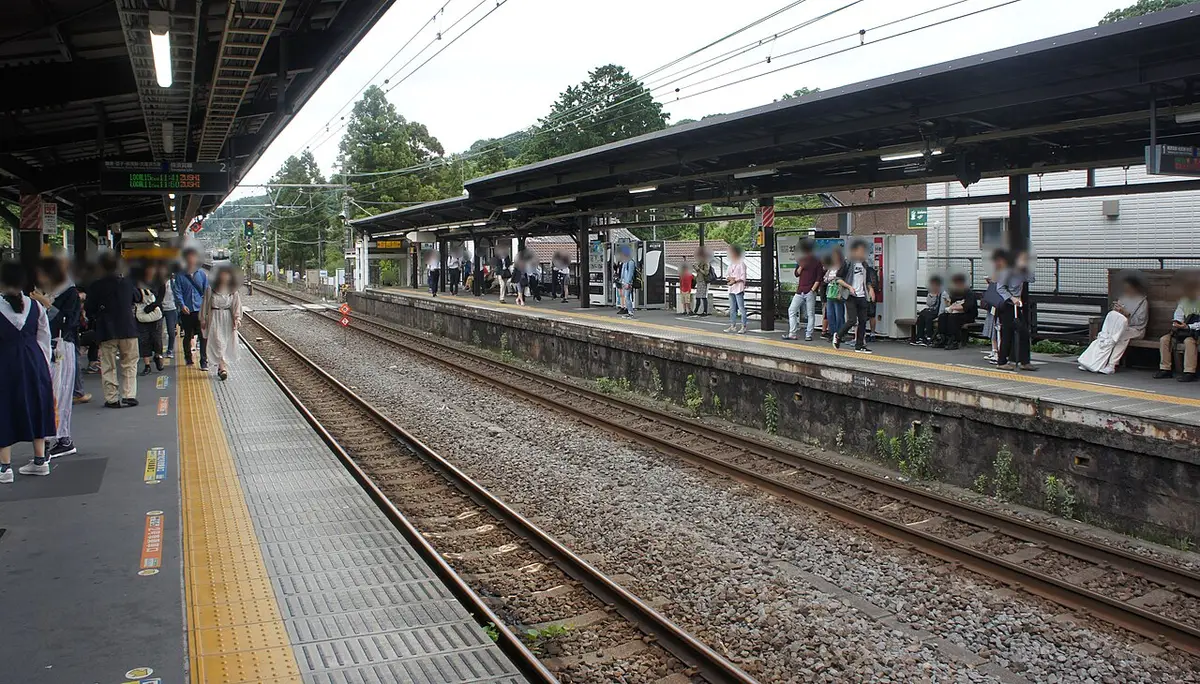
Both stations are on the JR Yokosuka Line, 3 minutes and ¥155 apart. Your first stop decides which one to use.
Get off at Kita-Kamakura if you want the Zen temples in the valley north of town. Engakuji is about 4 minutes on foot from the station, Meigetsu-in about 11 minutes and Kenchoji about 16 minutes. From Kenchoji it is about 13 minutes on foot to Tsurugaoka Hachimangu, and another 13 minutes to Kamakura Station. That walk through the valley is the classic way to start a day, and the train fare from Tokyo is a little lower (¥902 instead of ¥1,034). A half-day walking tour of the Zen temples and the Great Buddha starts here and walks south to the Great Buddha with a guide. In June 2026, Meigetsu-in opened at 8:30 for the hydrangea season, and an early train to Kita-Kamakura is the easiest way to be there at opening time.
From Tokyo 53 min, ¥902From Kamakura 3 min, ¥155Engakuji about 4 min on footMapOfficial site
Get off at Kamakura if you start with the shrine, Komachi-dori or the coast. Komachi-dori is about 7 minutes on foot from the station, and Tsurugaoka Hachimangu is about 13 minutes. The Tsurugaoka Hachimangu and Komachi Street tour meets at the station’s east ticket gate. The Enoden to Hase for the Great Buddha and Hasedera leaves from its own platforms next to the JR station. Buses to Hokokuji leave from the east exit.
From Tokyo 56 min, ¥1,034Enoden to Hase 4 min, ¥200Komachi-dori about 7 min on footMapOfficial site
The map shows both stations and the walking routes between the temples, and the itinerary page sets them in order for a half day, a full day and two days.
IC cards, contactless cards and the Enoden
An IC card is the easiest way to travel. Suica, PASMO and the other national transport IC cards work on JR, Tokyu, Keikyu, Odakyu, the Shonan Monorail and the Enoden. You tap in and out, and the right fare comes off the card.
The Enoden also takes contactless bank cards and phones at its gates (Enoden ticket guide): Visa, Mastercard, JCB, American Express, Diners Club, Discover and UnionPay. There are three catches:
- Adults only. Contactless cards always pay the adult fare. Children need a paper ticket or an IC card for the child fare.
- One card per person. You cannot tap one card for the whole family, and you must leave with the same card or phone you entered with.
- Not at the JR transfer gate. Inside Kamakura Station, the connecting gate between JR and the Enoden takes IC cards and paper tickets only. Contactless bank cards and QR tickets do not work there, so if you tap a bank card for the Enoden, use the Enoden’s own street-side gates.
QR tickets, including the Noriorikun day pass and the digital Enoshima-Kamakura Freepass, are read at the QR reader on the touch-payment gate. Hold the phone 2 to 3 cm from the reader.
Enoden trains are short, so on weekends and holidays it pays to ride early in the day. Kamakura City runs a live crowd map for Komachi-dori and the Hase area. The best time to visit page and the crowd calendar show which dates to avoid.
Getting back to Tokyo
The trains run the same way home. From Kamakura, Yokosuka Line trains for Tokyo and Shonan-Shinjuku Line trains for Shinjuku leave from the JR platforms; check that a Shonan-Shinjuku Line train is heading for Shinjuku before you board. If your day ends on Enoshima, the Odakyu Line from Katase-Enoshima, with or without the Romancecar, takes you straight back to Shinjuku without returning to Kamakura.
Other local passes exist, but most do not pay off from Tokyo. The Kamakura Free Kankyo Tegata (¥900) covers only the Enoden between Kamakura and Hase plus buses from Kamakura Station’s east exit; it starts in Kamakura, so you still pay the train from Tokyo. JR East’s NONBIRI Holiday Suica Pass (¥2,850) covers JR local and rapid trains in its zone on weekends and holidays; from Tokyo Station, the plain round trip of ¥2,068 is cheaper unless you also ride JR around Tokyo that day.
If you would rather not plan the trains at all, a guided Kamakura and Enoshima day tour with train ride from Tokyo covers the Great Buddha and Enoshima with a guide who handles tickets and changes. Our tours page compares the other guided options.
Which route fits your day
The table gives the facts; your plans decide. A few common cases:
Staying in Shinjuku, Kamakura only. Take a Shonan-Shinjuku Line train for Zushi. It is the same fare as from Tokyo Station and needs no change. Go out to Kita-Kamakura if you want the temples first, and come back from Kamakura.
Staying in Shinjuku, Kamakura and Enoshima. Look at the Odakyu Line first. Out on Odakyu to Katase-Enoshima, the Enoden along the coast to Hase and Kamakura, and the Enoden back to Fujisawa for Odakyu home is the route the Freepass was made for. A small-group day trip from Shinjuku covers shrines, temples and the seaside with the Freepass included. If you would rather be back fast, ride JR home from Kamakura and pay single Enoden fares instead.
Staying near Tokyo Station, Ginza or Shinagawa. The Yokosuka Line is the answer. There is no pass that beats a plain IC card from here on a normal day.
Staying in Shibuya. The direct JR train for Zushi is the simplest. If you are watching every yen, the Tokyu Toyoko Line to Yokohama and JR from there is cheaper and 12 minutes slower on the sample search.
Staying in Yokohama. You have the shortest, cheapest trip of all. Consider the Monorail from Ofuna to Enoshima and the Enoden to Kamakura for a loop that never repeats a line.
Traveling with children. Enoden child fares are half the adult fare (¥100 to Hase instead of ¥200), and the Freepass from Shinjuku costs only ¥430 for a child aged 6 to 11. Give each child an IC card or a paper ticket; a contactless bank card always pays the adult fare.
Holding a Japan Rail Pass. JR trains, including the Yokosuka and Shonan-Shinjuku Lines, are JR East lines and are covered. The Enoden, Odakyu, Tokyu, Keikyu and the Shonan Monorail are private lines and are not part of any JR pass, so budget for the Enoden separately.
Arriving with big luggage. Kamakura’s streets and temple steps are hard work with a suitcase. Leave luggage at your hotel in Tokyo, or send it ahead with a luggage delivery service, and travel light for the day. Our where to stay page lists bases near the stations if you want to sleep in Kamakura. Hotel Metropolitan Kamakura is a short walk from Kamakura Station.
Before you go
- Load at least the round-trip fare on your IC card before you set off, plus the Enoden rides you plan.
- On a weekend, take an early train. The day trip page shows how to order the stops so you reach the busiest places first.
- If your day includes Enoshima and you start in Shinjuku, compare JR with the Freepass before you buy anything.
- Use the planner to build a day around the train you will take, and the travel guide for everything else.
Questions people ask
How do I get from Tokyo to Kamakura by train?
Take the JR Yokosuka Line from Tokyo Station. It runs straight to Kamakura with no change in about 56 minutes and costs ¥1,034 with an IC card such as Suica or PASMO. From Shinjuku or Shibuya, take a JR Shonan-Shinjuku Line train for Zushi, which also runs through to Kamakura for the same fare.
Which station do I get off at for Kamakura?
Get off at Kamakura Station for Tsurugaoka Hachimangu, Komachi-dori and the Enoden line to the Great Buddha and Hasedera. Get off one stop earlier at Kita-Kamakura for Engakuji, Meigetsu-in and Kenchoji, then walk south to Kamakura. Both are on the same JR line.
How long is the train from Tokyo to Kamakura?
About 56 minutes from Tokyo Station, 58 minutes from Shinjuku, 53 minutes from Shibuya on a direct train, 46 minutes from Shinagawa and 24 minutes from Yokohama. All of these run without a change if you board the right train.
How do I get from Haneda Airport to Kamakura?
Take the Keikyu Line from Haneda Airport Terminal 1-2, change to the Keikyu Main Line and then to the JR Yokosuka Line at Yokohama. The fastest sample connection takes 54 minutes with two changes and costs ¥837 with an IC card.
Can I pay for the Enoden with a credit card?
Yes. Enoden gates take contactless Visa, Mastercard, JCB, American Express, Diners Club, Discover and UnionPay cards, as well as Suica, PASMO and other IC cards. Contactless cards charge adult fares only, one card per person, and they do not work at the JR transfer gate inside Kamakura Station.
Is Kamakura a good day trip from Tokyo?
Yes. Direct trains take under an hour from Tokyo, Shinagawa, Shinjuku and Shibuya, and a round trip from Tokyo Station costs ¥2,068 with an IC card. A full day covers the Great Buddha, Hasedera and the main shrine, and adding Enoshima is easy on the Enoden.
Read next


Sources (19)
- JR East Real-Time Route Search: Tokyo to Kamakura
- JR East Real-Time Route Search: Shinjuku to Kamakura
- JR East Real-Time Route Search: Shibuya to Kamakura
- JR East Real-Time Route Search: Shinagawa to Kamakura
- JR East Real-Time Route Search: Yokohama to Kamakura
- JR East Real-Time Route Search: Tokyo to Kita-Kamakura
- JR East Real-Time Route Search: Haneda Airport to Kamakura
- JR East Real-Time Route Search: Narita Airport to Kamakura
- JR East: Green Car fares on ordinary trains (Japanese)
- JR East: Green Cars on local trains (English)
- Enoden: fares between stations
- Enoden: tickets, IC cards and contactless payment at the gates (Japanese)
- Enoden: Kamakura Station timetable
- Odakyu: Enoshima-Kamakura Freepass
- Odakyu: Enoshima-Kamakura Freepass coverage (Japanese)
- Shonan Monorail: fares
- Shonan Monorail: 1-day ticket and journey time
- City of Kamakura: Kamakura Free Kankyo Tegata
- Engakuji: access