Seasons
Kamakura autumn leaves: when and where
Table of contents
Kamakura’s autumn leaves come late. Color starts around Kita-Kamakura in early November, the city’s tourism association puts the peak in late November to early December, and at the Yokohama observatory the ginkgo turns yellow around December 6 and the maple turns red around December 19 in a typical recent year. For the best odds, go on a weekday in the first ten days of December. Below are the windows, past years’ dates, and seven spots, starting in Kita-Kamakura where color begins and moving on to the eastern valleys and the western hills.
When Kamakura’s leaves turn
Kamakura has no official leaf observation of its own. The closest is the Japan Meteorological Agency’s observatory in Yokohama, where observers record the day a reference ginkgo has turned yellow and the day a reference maple has turned red, judged on the tree as a whole. These are Yokohama dates, not Kamakura peak dates. Treat them as the back end of the season: by the time the observatory’s maple is red, the earliest trees in Kita-Kamakura have been colored for weeks.
Here are recent years from the agency’s ginkgo and maple tables:
| Year | Ginkgo yellow | Maple red |
|---|---|---|
| 2025 | November 28 | December 15 |
| 2024 | December 5 | December 20 |
| 2023 | December 7 | December 21 |
| 2022 | December 5 | December 19 |
| 2021 | December 9 | December 24 |
| 2020 | December 9 | December 22 |
| 2019 | December 9 | December 16 |
| 2018 | December 9 | December 23 |
| 2017 | November 26 | December 4 |
The pattern is steady: ginkgo in the first week of December, maple about two weeks later. The 1991 to 2020 normals at Yokohama were November 30 for ginkgo and December 14 for maple, so recent autumns have run a few days later than the long-term average.
That is later than the “mid-November” many travel sites give. The Kamakura City Tourism Association also notes that Kamakura colors later than other regions, starting near Kita-Kamakura Station in early November and peaking from late November to early December. Put the two together and the sweet spot is the last days of November through about December 10, with the observatory’s maples still turning in mid-December.
The bloom calendar shows these windows next to cherry and hydrangea, and the best time to visit page puts autumn against the rest of the year.
Seven autumn leaf spots, starting in Kita-Kamakura
The list starts where the tourism association says color begins, around Kita-Kamakura Station, then moves south and east. Fees are for adults.
Engakuji
Engakuji sits right outside Kita-Kamakura Station, where the tourism association says Kamakura’s color begins. Autumn leaves are among its seasonal highlights, around the Sanmon gate and the main halls. Note the winter hours: from December, Engakuji closes at 16:00, half an hour earlier than in November. The Kita-Kamakura Zen temples and autumn colors walk starts at the station’s east exit and covers Engakuji, Meigetsu-in, Jochiji and Kenchoji in three hours.
Fee ¥500 (child ¥200)Hours 8:30-16:30; December to February 8:30-16:00From Kita-Kamakura Stn 1 min walkMapOfficial site
Kenchoji
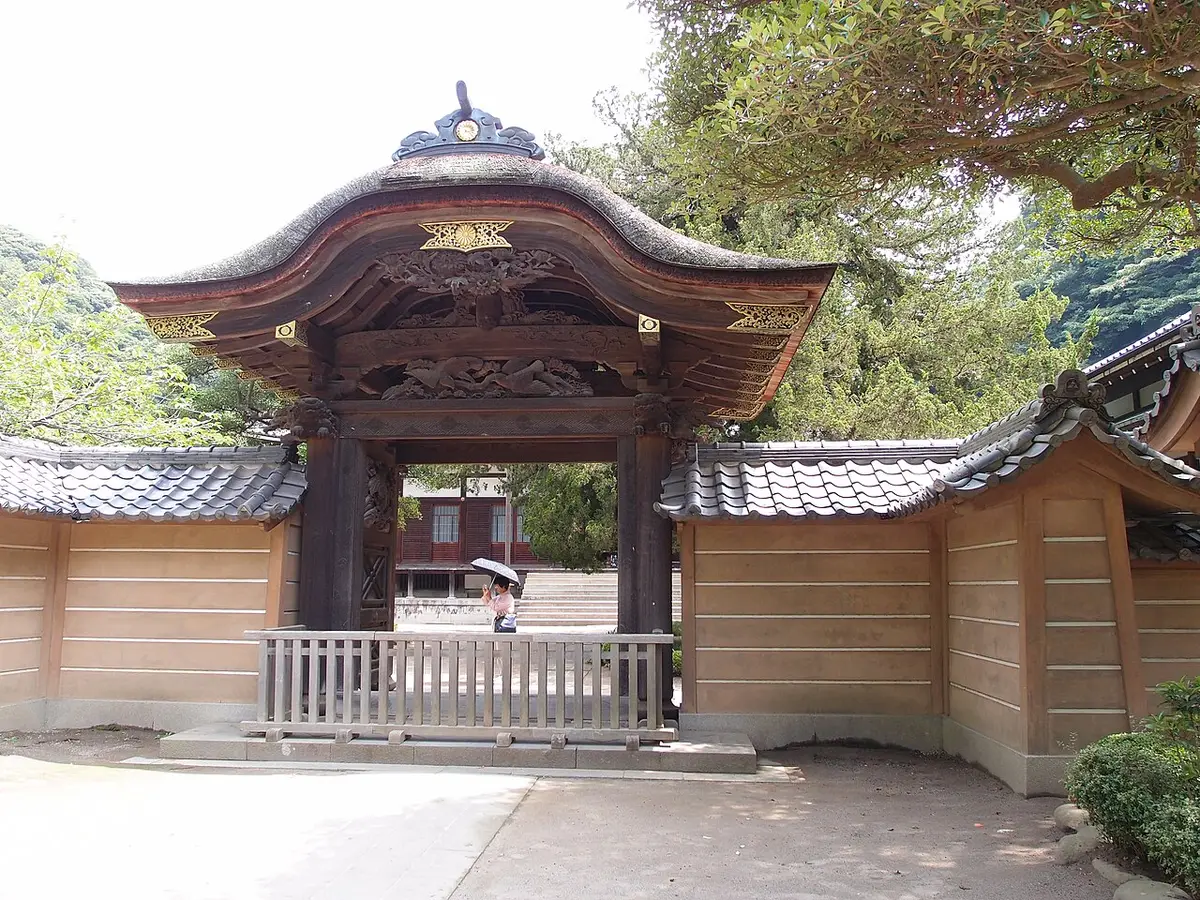
Kenchoji, the first-ranked of Kamakura’s five great Zen temples, lists bush clover and autumn leaves as its autumn flowers. Deep in the grounds, Hansobo shrine leads up toward the hills; a steep climb of about 250 steps from there reaches the Shojoken observation deck, about 30 minutes from the main gate. Hikers who enter the hills through the temple pay the admission too. Cash only.
Fee ¥500 (child ¥200), cash onlyHours 8:30-16:30From Kita-Kamakura Stn about 15 min walkMapOfficial site
Hasedera
Hasedera in Hase is known for its autumn colors as well as its hydrangeas, and its lookout faces over the town to the sea. From November 21 to December 6, 2026 the temple holds its autumn night viewing: the lights come on before dark and the gates stay open until 19:00, with the grounds closing at 19:30. It runs in the rain and may be extended if the leaves are late. Tripods and monopods are not allowed. To stay close to the evening lights, BRB Kamakura Hase is within walking distance of Hasedera.
Fee ¥400 (child ¥200), same for the night viewingHours 8:00-16:30 entry; night viewing to 19:00From Hase Stn 5 min walkEnoden from Kamakura 4 min, ¥200MapOfficial site
Kakuonji
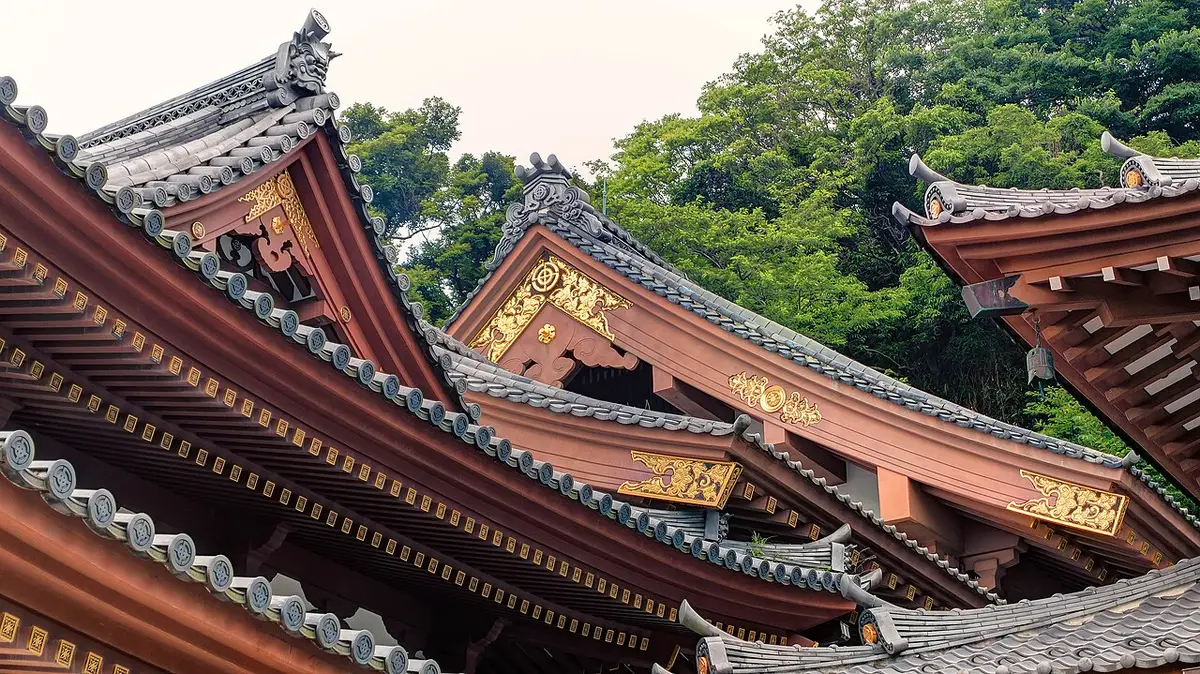
Kakuonji, in the Nikaido district, grew up around a Yakushi hall built by the regent Hojo Yoshitoki. It lists autumn leaves among its seasonal flowers, and photography is not allowed in the grounds. Visitors can enter the Yakushido Hall on their own; a guided tour needs advance contact. In 2025 the temple opened in the evening from November 28 to December 10. Check before you go: as of 2023 it closed from December 20 to January 7 and in bad weather. Kakuonji is also an entrance to the Ten-en hiking trail.
Fee ¥500 (child ¥200)Hours 10:00-16:00, last entry 15:40Closed Dec 20 to Jan 7, Apr 27, Aug 10, bad weatherAccess bus to Daitonomiya, then about 10 min walkMapOfficial site
Zuisenji
Zuisenji, also in Nikaido, was the family temple of the Kamakura kubo governors and is known for its bamboo and its autumn colors. Its rock garden, cut into the bedrock and attributed to the Zen master Muso Soseki, is a national place of scenic beauty.
Fee ¥200 (child ¥100)Hours 9:00-17:00, entry until 16:30Access bus to Daitonomiya, then 10 min walkOn foot about 14 min from Kamakura-guMapOfficial site
Tsurugaoka Hachimangu: the ginkgo and Yanagihara pond
Tsurugaoka Hachimangu once had Kamakura’s most famous ginkgo, a sacred tree that watched over the town’s history. It was blown down by strong winds before dawn on March 10, 2010. Today a shoot from the old roots, the “child” ginkgo, grows next to the replanted trunk of the “parent”, and you can see part of the fallen trunk up close in the museum cafe. East of the Maiden stage, the shrine’s Yanagihara pond is at its best in the leaf season. Entry is free.
Fee freeHours gates 6:00-20:00From Kamakura Stn 10 min walk (east exit)MapOfficial site
Genjiyama Park
Genjiyama Park on the western hills lists ginkgo and maple for autumn, and the city describes it as a place for autumn leaves as much as for spring cherries. The Daibutsu hiking trail passes through, so you can walk on to the Great Buddha, or drop down to Zeniarai Benzaiten, about 3 minutes away on foot. Expect a long slope up from the station. A guided hidden trails day hike follows the Daibutsu trail with a licensed local guide.
Fee freeFrom Kamakura Stn about 20 min walk from the west exit, uphillFacilities shelters and public toiletsMapOfficial site
A one-day autumn leaf route
This route follows the leaves from north to east in one day on foot, with a bus to finish. Walking times are along OpenStreetMap paths at an easy pace unless a temple states its own.
- 8:30, Engakuji. Take the JR Yokosuka Line to Kita-Kamakura, 53 minutes from Tokyo Station for ¥902 by IC card.
- About 9:45, Kenchoji. About 18 minutes on foot from Engakuji.
- About 11:00, Tsurugaoka Hachimangu. About 13 minutes on foot from Kenchoji. Lunch on Komachi-dori.
- About 13:30, Kamakura-gu and Kakuonji. Kamakura-gu is about 16 minutes on foot from the shrine; Kakuonji is about 10 minutes beyond the Daitonomiya bus stop.
- About 15:00, Zuisenji. About 14 minutes on foot from Kamakura-gu. Take the bus back to Kamakura Station from Daitonomiya.
On a night-viewing date, swap the eastern half for Hase: take the Enoden to Hase in the afternoon, see the Great Buddha before it closes at 17:00 (October to March), and reach Hasedera as the lights come on. Fit hikers can cross the hills on the Ten-en trail, which has an entrance by Kakuonji (route on the hiking trails page). Its section between the Kakuonji and Ryokuendai entrances closed for a fallen tree in March 2026 and reopened on March 10, so check the tourism association’s notices before you set out.
The itinerary page has timed full-day versions with train times, and the map shows every stop.
More color near the main spots
A few more places show autumn color close to the route above. Kamakura-gu, the shrine at the Daitonomiya bus stop, lists maple as its autumn tree, and its grounds are free; in October it hosts the torchlit Kamakura Takigi Noh. Meigetsu-in, best known for June hydrangeas, sits between Engakuji and Kenchoji, a 10-minute walk from Kita-Kamakura Station, and is open 9:00 to 16:00. Hokokuji’s bamboo garden, about 16 minutes on foot from Kamakura-gu, is green in every season.
On the coast, the leaves are fewer but the light is good. From the Enoden between Hase and Enoshima you can see the sea, and on clear late-autumn days Mt. Fuji appears across the bay from Inamuragasaki and Enoshima. The Enoden guide has stations and fares, and the Enoshima page covers the island.
Getting around in leaf season
The leaf spots split into three areas: Kita-Kamakura (Engakuji, Meigetsu-in, Kenchoji), the center and Nikaido (Tsurugaoka, Kamakura-gu, Kakuonji, Zuisenji), and Hase (Hasedera). Kita-Kamakura is 3 minutes from Kamakura by JR for ¥155, Hase 4 minutes by Enoden for ¥200, and the Nikaido temples are a bus ride from stop 5 at Kamakura Station’s east exit to Daitonomiya. Walking between Kita-Kamakura and the center is easy; Nikaido is a longer walk, and the bus saves your legs for the temple steps.
For trains from Tokyo, Shinjuku or Yokohama, see how to get to Kamakura and the day trip from Tokyo guide. The trip cost calculator adds up fares and the temple fees on this page, and the tours page compares guided options.
Crowds and holidays in leaf season
November is busy: the City of Kamakura counted 1.27 million visits in November 2025, against 819,461 in December. The two peaks are the national holidays and the weekend after them.
- 2026: Labor Thanksgiving Day falls on Monday, November 23, making November 21 to 23 a three-day weekend that coincides with the start of Hasedera’s night viewing.
- 2027: Culture Day is Wednesday, November 3, and Labor Thanksgiving Day Tuesday, November 23.
Weekdays in early December are the best balance of color and space. Hokokuji, the bamboo temple near Kamakura-gu, has added evening visits on set dates: November 21, December 11 and December 19 in 2026, 18:00 to 20:00 (tourism association).
If you would rather have someone else handle the route, the City of Samurai walking tour is a three-and-a-half-hour small-group walk in English. For a full day from Tokyo with the main sights, the Kamakura and Enoshima day tour covers Tsurugaoka Hachimangu, Hasedera, the Great Buddha and Enoshima. Staying the night puts you at Engakuji’s gate at 8:30 without the early train: Hotel Metropolitan Kamakura is a short walk from Kamakura Station, and the where to stay guide compares areas.
Weather in autumn
Late autumn is one of Kamakura’s best weather windows. The Japan Meteorological Agency’s normals for Yokohama give November a daily high of 17.1°C (63°F) and a low of 10.1°C (50°F), and December 12.5°C (54°F) and 5.2°C (41°F). After a wet October (about 240 mm), November drops to about 108 mm and December to 66 mm, with only about six rain days. December averages 178 hours of sunshine.
That dry, clear air is also why late autumn and winter are the best time for views of Mt. Fuji from the coast; see Kamakura in winter. Bring a warm layer for early starts and for the evening at Hasedera, and remember that the sun sets early: plan your last temple for mid-afternoon.
Questions people ask
When is the best time to see autumn leaves in Kamakura?
The first ten days of December give the best odds. The Kamakura tourism association puts the peak in late November to early December, and at the Yokohama observatory the ginkgo turns yellow around December 6 and the maple turns red around December 19 in a typical recent year. Color starts around Kita-Kamakura in early November.
Where are the best autumn leaves in Kamakura?
Engakuji and Kenchoji in Kita-Kamakura, where color starts first, Hasedera in Hase, with evening openings from late November, and the Nikaido temples Kakuonji and Zuisenji. Tsurugaoka Hachimangu's Yanagihara pond and ginkgo trees and Genjiyama Park on the western hills are free to visit.
Are Kamakura's autumn leaves later than Tokyo's?
Yes, later than in most other regions, according to the Kamakura tourism association, which puts the peak in late November to early December. The maples at Yokohama's observatory have turned red between December 4 and December 24 in recent years, and the 1991 to 2020 normal is December 14.
Can you see the autumn leaves at night in Kamakura?
Yes. Hasedera holds an autumn night viewing from November 21 to December 6, 2026, from sunset to 19:00, for the normal ¥400 fee. Kakuonji has also opened in the evening in late autumn, and Hokokuji runs evening visits on set dates from November 2026.
Is Kamakura crowded in autumn leaf season?
On weekends and holidays, yes, especially around November 23 and on the last weekend of November. November drew 1.27 million visits in 2025. Weekdays in early December are calmer: December had the second-lowest visitor count of any month that year, and the leaves are still near their peak.
Read next


Sources (21)
- Japan Meteorological Agency: plant phenology records (Yokohama)
- Japan Meteorological Agency: ginkgo yellow leaves table
- Japan Meteorological Agency: maple red leaves table
- Japan Meteorological Agency: climate normals 1991-2020, Yokohama
- Kamakura City Tourism Association: autumn leaves
- Engakuji (official): visiting hours and fees
- VISIT KAMAKURA: Engakuji Temple
- Kenchoji (official): visiting hours, fees, access
- VISIT KAMAKURA: Kenchoji Temple
- Hasedera (official): autumn night viewing 2026
- Hasedera (official): hours and admission
- VISIT KAMAKURA: Kakuonji Temple
- VISIT KAMAKURA: Zuisenji Temple
- Tsurugaoka Hachimangu (official): grounds, ginkgo trees and Yanagihara pond
- City of Kamakura: Genjiyama Park
- VISIT KAMAKURA: Genjiyama Park
- VISIT KAMAKURA: Ten-en trail closure lifted (March 2026)
- Kamakura City Tourism Association: Hokokuji evening visits
- City of Kamakura: tourism statistics 2025 (monthly visits)
- Cabinet Office: national holidays 2026-2027
- OpenStreetMap walking routes (OSRM foot profile)