Food
Kamakura food: shirasu, Komachi-dori and temple cooking
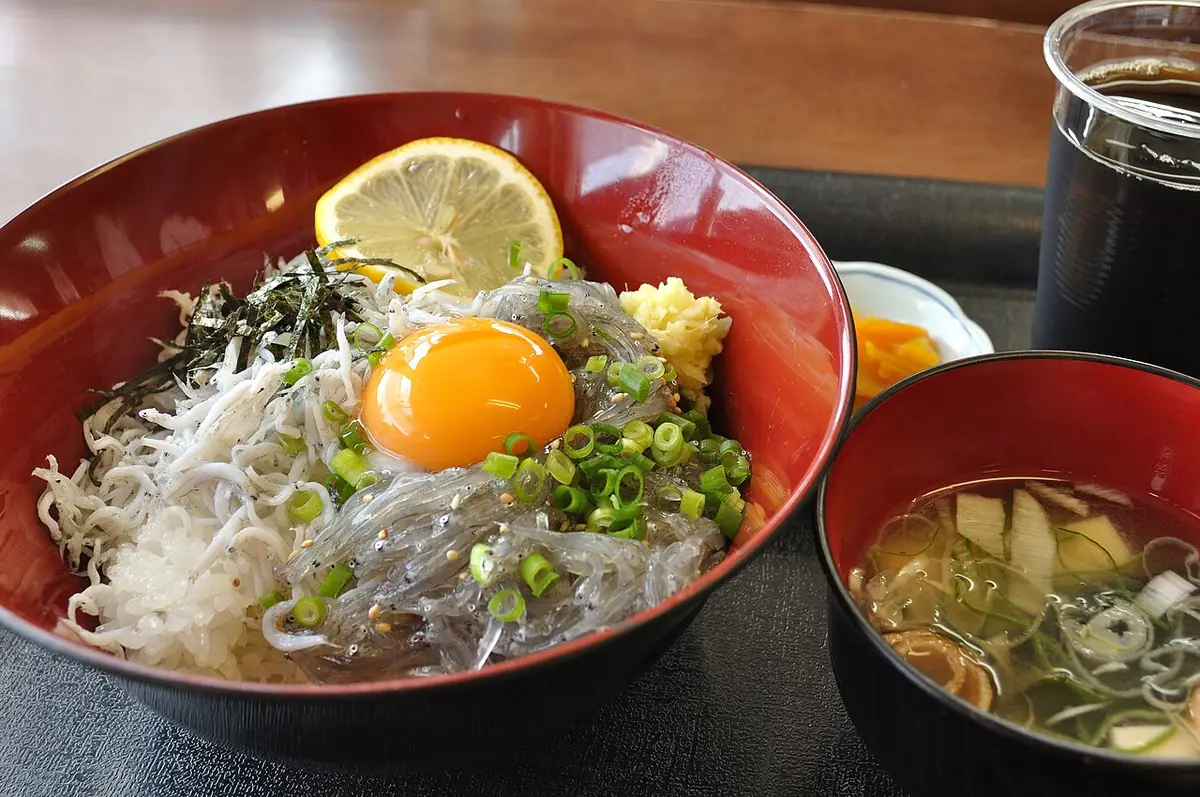
Table of contents
Kamakura food means four things. Shirasu, the tiny whitebait landed along Sagami Bay, eaten boiled or raw over rice. Komachi-dori, the shopping street from the station to the shrine, lined with snack stands and sweet shops. Kamakura vegetables, sold by local farmers at the Renbai market a few minutes from the station. And temple cooking, the vegetarian shojin ryori of Buddhist kitchens. Two rules shape a food day here: there is no raw shirasu from January 1 to March 10, and the city asks people not to eat while walking in crowded streets. Below: what to try, a few places with their hours, and food tours and classes you can book.
Shirasu: Kamakura’s signature dish
Shirasu are the larvae of small fish. Kanagawa Prefecture’s fisheries guide names three species: Japanese anchovy, which has made up most of the catch in recent years, Japanese sardine and round herring. Fishers along the coast often process the catch themselves and sell it directly as boiled or dried shirasu.
You will see shirasu in three main forms:
- Kamaage shirasu: boiled, soft and white. Sold all year.
- Nama shirasu: raw and translucent. Only from the same day’s catch.
- Shirasu-boshi and tatami-iwashi: dried, either loose or pressed into thin sheets.
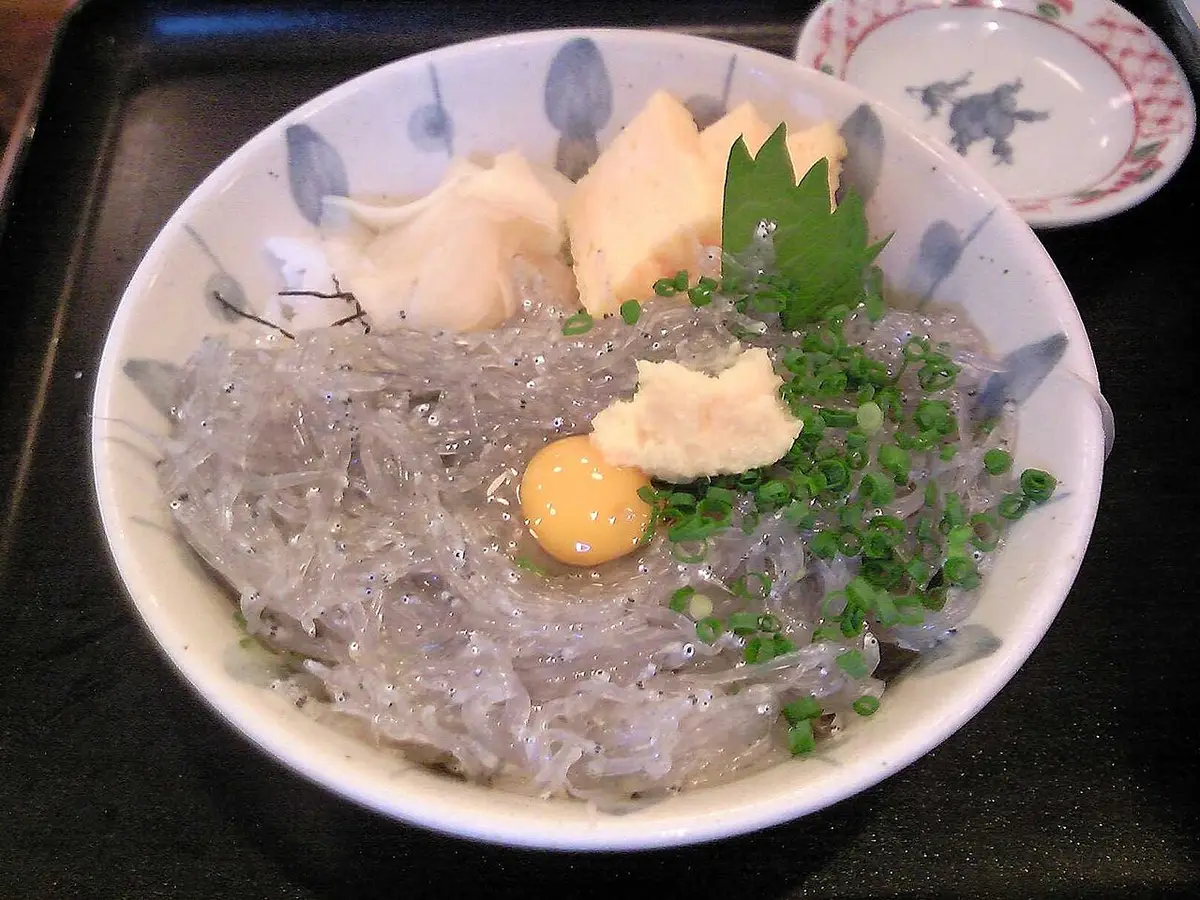
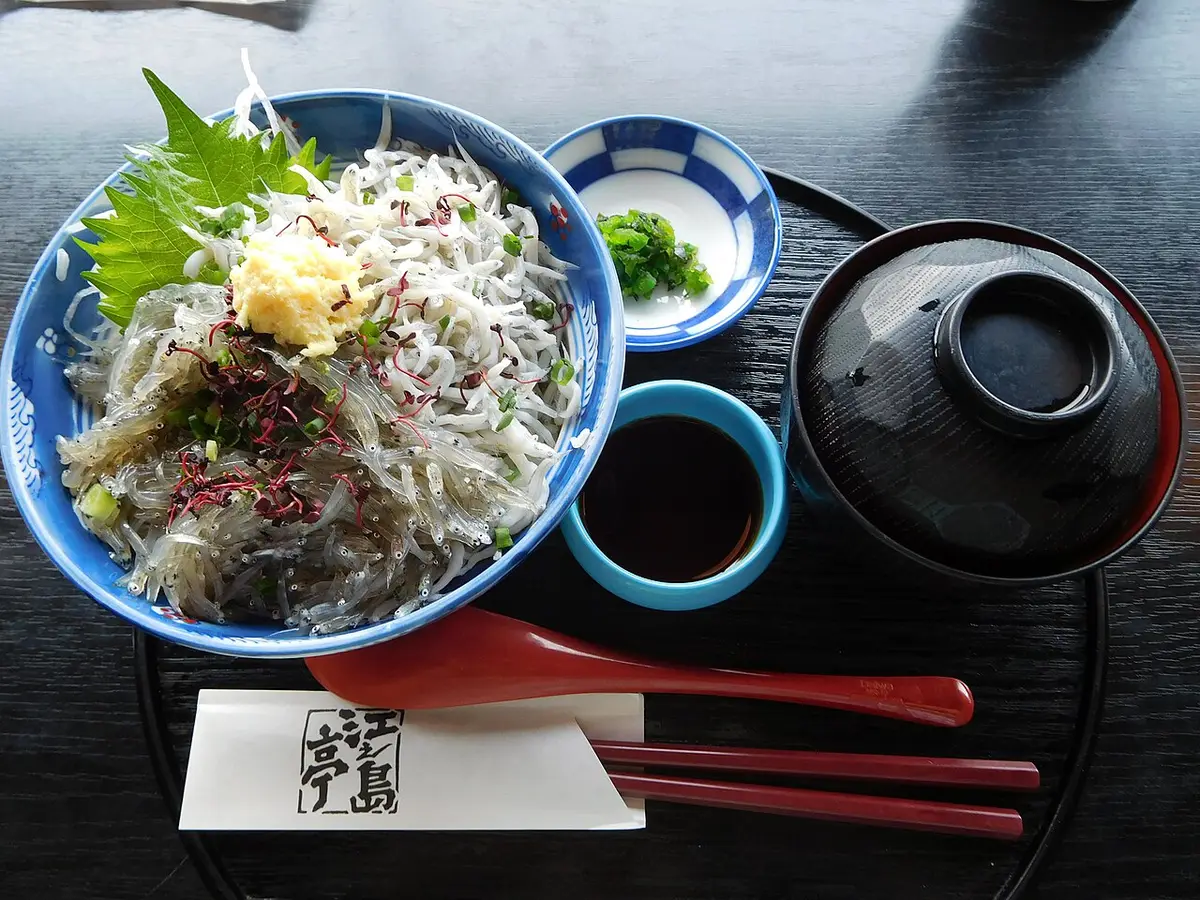
The classic way to eat it is shirasu-don, a bowl of rice topped with shirasu, sometimes half raw and half boiled. Visit Kanagawa, the prefecture’s tourism site, calls raw shirasu-don a famous regional dish of the Shonan coast.

Shirasu season and the fishing ban
Kanagawa bans shirasu fishing from January 1 to March 10 each year to protect young ayu (sweetfish). The main seasons are spring, April to June, and summer to autumn, from July. Restaurants that serve raw shirasu say plainly that it depends on the catch: on stormy days, or when the boats find little, raw shirasu is off the menu.
What this means for your trip:
- January to mid-March: no fresh raw shirasu. Boiled and dried shirasu are still on sale, as are other local fish.
- Mid-March to December: raw shirasu most days. Go at lunch rather than dinner if raw shirasu is the point; some restaurants limit raw-shirasu bowls each day.
- Bad weather: if the sea has been rough for a day or two, ask before you queue.
Where to eat shirasu
Shirasu-don is served all over central Kamakura and on Enoshima. Visit Kanagawa’s Komachi Street page suggests a shirasu-don stop as part of a walk there. One restaurant that publishes clear rules on raw shirasu:
Tobiccho, Enoshima main store. A shirasu wholesaler’s restaurant on Enoshima. Its store page says raw shirasu is made only from fish caught that day and is unavailable during the ban or when catches are poor; some raw-shirasu bowls are limited each day. It has no regular closing day but may close in storms. Pair it with a day on Enoshima, 24 minutes from Kamakura on the Enoden.
Hours 11:00-21:00 (last order 20:00 weekdays, 20:30 weekends)Closed no regular dayRaw shirasu same-day catch onlyAddress 1-6-7 Enoshima, FujisawaMapOfficial site

Shirasu month by month
| Months | Fishing | What to expect on the menu |
|---|---|---|
| January 1 to March 10 | banned | Boiled and dried shirasu only; no fresh raw shirasu |
| March 11 to end of March | open | First raw shirasu of the year, catch permitting |
| April to June | spring season | Raw and boiled shirasu-don most days |
| July to December | summer to autumn season | Raw and boiled most days; none when boats stay in port |
Daily availability depends on each restaurant’s catch.
Menu words to know
- Don (or donburi): a bowl of rice with a topping. Shirasu-don is the local one; nishoku-don (“two-color” bowls) mix raw and boiled shirasu.
- Nama: raw. Kamaage: boiled. Teishoku: a set meal with rice, soup and pickles.
- Kaisen-don: a bowl of mixed raw seafood.
- Shojin ryori: Buddhist vegetarian cooking. Kaiseki: a multi-course seasonal meal.
- Wagashi: traditional Japanese sweets, often served with matcha, powdered green tea.
- Senbei: rice crackers. Dango: rice dumplings on a skewer.
If you avoid raw fish, ask for kamaage, which is cooked.
Komachi-dori and Yuigahama-dori
Komachi-dori
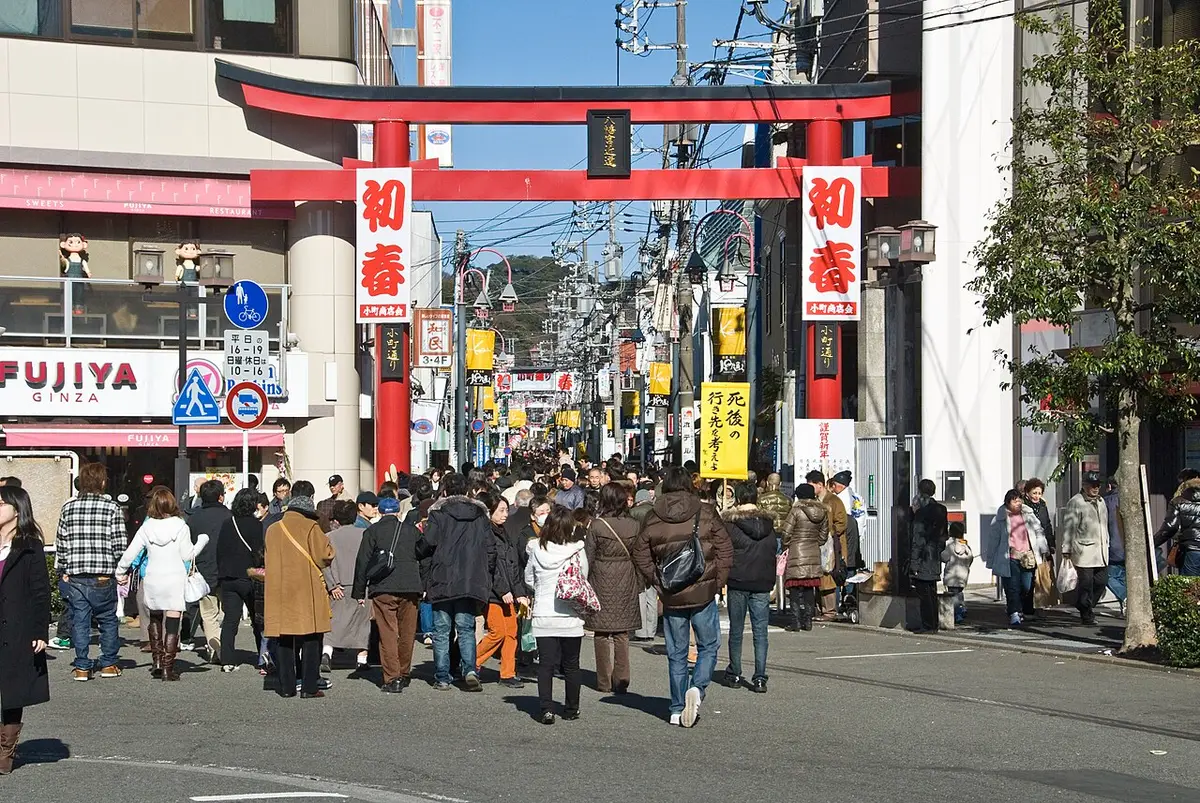
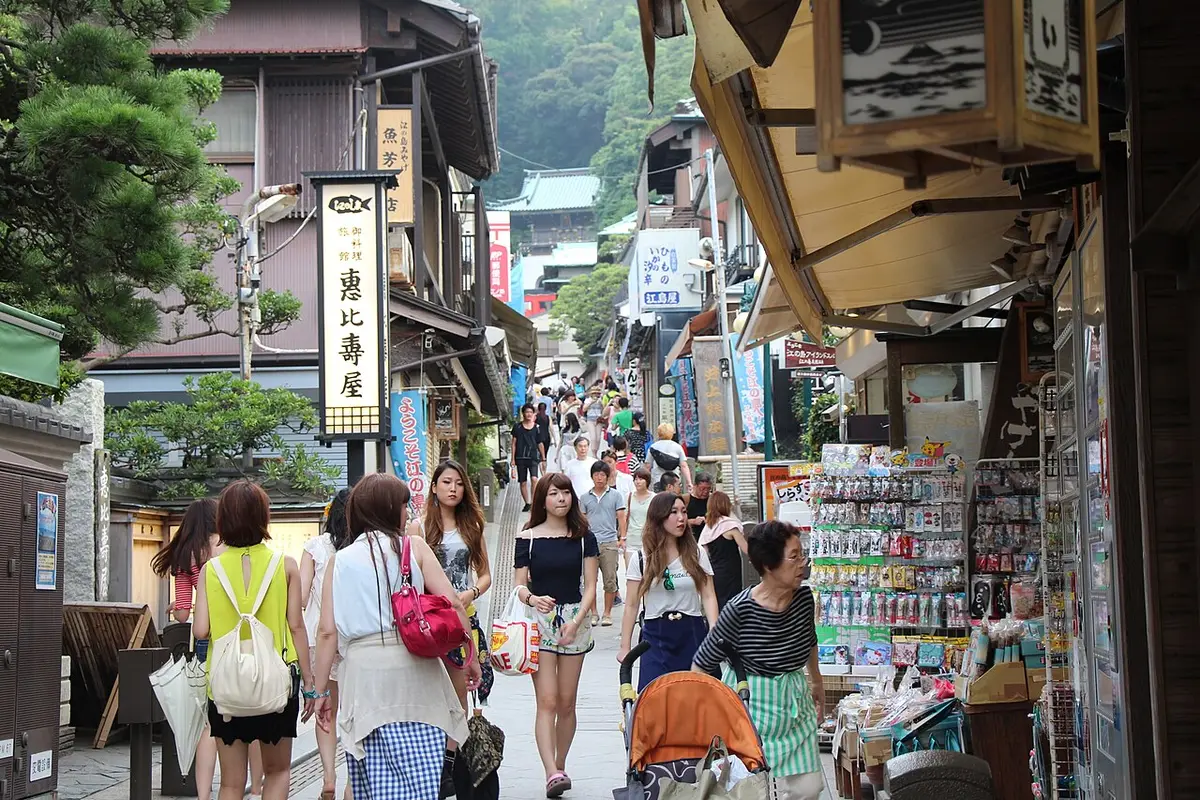
Komachi-dori starts right next to Kamakura Station’s East Exit and runs toward Tsurugaoka Hachimangu, parallel to the main avenue, Wakamiya-oji. Visit Kanagawa counts about 250 shops on it: snack stands, sweet shops, cafes, restaurants, souvenir and craft shops. It suggests about 40 minutes for a walk, which is enough if you are not shopping seriously. From the station to the shrine is about 13 minutes on foot. A street food and historical sites walking tour starts at Kamakura Station and runs about three hours. The city’s live crowd map shows how busy the street is right now.
What to look for:
- Shirasu, in bowls, on rice crackers and in croquettes.
- Senbei (rice crackers).
- Bean snacks and sweets, from flavored roasted beans to mochi and dango.
- Matcha in drinks, soft-serve and sweets.
Eating while walking. Kamakura City’s manners ordinance, in force since April 1, 2019, lists “eating and drinking while walking in narrow or crowded places, which may soil other people’s clothes” among the acts residents and visitors should try to avoid. It carries no fine, and it is not a ban on street food. In practice: buy your snack, eat it at the stand’s counter or bench, and walk on. Do not carry food into temples; Kotoku-in, the Great Buddha, turns away visitors who walk in eating.
Shops about 250Start next to Kamakura Station East ExitStation to shrine about 13 min walkSuggested visit 40 minMapOfficial site

Yuigahama-dori
Yuigahama-dori is the other shopping street of central Kamakura, on the way toward the Hase side of town. It is an everyday street of two- and three-story shopfronts rather than a snack strip for visitors. Kamakura City protects its look as a landscape district, and its guideline sorts the shopfronts into four types, from buildings designed before the war to new ones (city guideline, Japanese). Walk it if you are heading on foot toward Hase or the beach and want to eat away from the busiest streets.


Kamakura vegetables and the Renbai market
Vegetables grown in and around Kamakura appear on local menus as “Kamakura yasai” (Kamakura vegetables). The place to see them is the Kamakura agricultural co-op market, known locally as Renbai. Visit Kanagawa describes it as a farmers’ market selling local produce, where 21 local farmers, divided into four groups, take turns selling every four days. So what is on the tables changes from day to day.
It sells produce, not meals, so think of it as a place to buy fruit for the train, or vegetables if your accommodation has a kitchen. The market opens at 8:00, which makes it an easy first stop before the temples.
Hours 8:00-17:00Closed January 1 to 4From Kamakura Stn about 3 min walkAddress 1-13-10 KomachiMapOfficial site
Shojin ryori: temple food
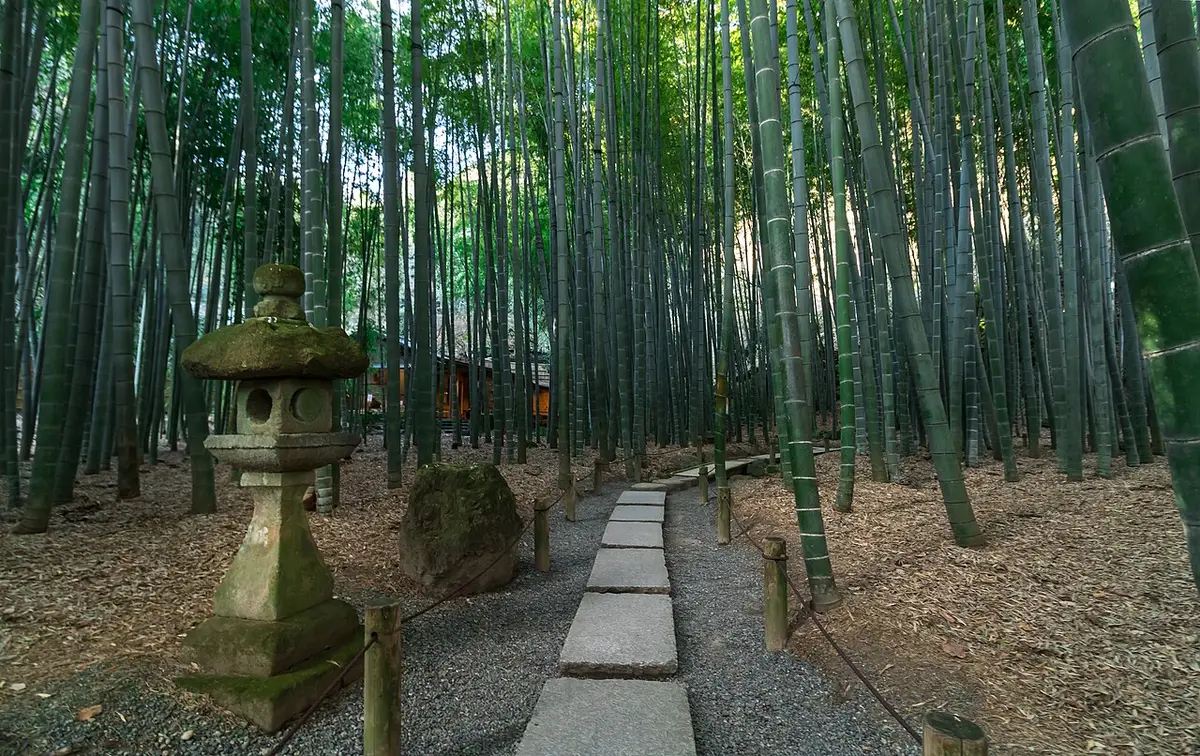
Shojin ryori is the vegetarian cooking of Japanese Buddhist temples: no meat or fish, with tofu, sesame, seasonal vegetables and mountain plants. Kamakura has many temples, but only some serve meals to visitors, and arrangements change. One temple that publishes its arrangements clearly is Komyoji.
Komyoji
Komyoji is one of the head temples (daihonzan) of the Jodo sect, in the Zaimokuza district near the beach. It serves shojin ryori lunches in two set menus, in shared rooms or, for a supplement, in a private room in a separate hall.
The rules are strict, so read them before you plan:
- Days: Monday, Tuesday, Saturday and Sunday. No meals on Wednesday, Thursday or Friday.
- Times: lunch only, with seatings at 11:30, 12:00, 12:30, 13:00 and 13:30.
- Booking: by phone or in person only (no email or web form), between two months and 11 days ahead. Reception is open 9:00 to 16:00.
- Minimum: groups of 2 to 48 can book, but the day’s total must reach six people; small groups are confirmed 10 days before.
- Closed periods: all of February, October 10 to 15 (a memorial service) and December 20 to January 6.
- Changes: up to three days before.
If you do not speak Japanese, ask your hotel to call for you.
Days Mon, Tue, Sat, SunSeatings 11:30 to 13:30Book 2 months to 11 days ahead, by phoneClosed Feb, Oct 10-15, Dec 20-Jan 6MapOfficial site
Hachinoki in Kita-Kamakura
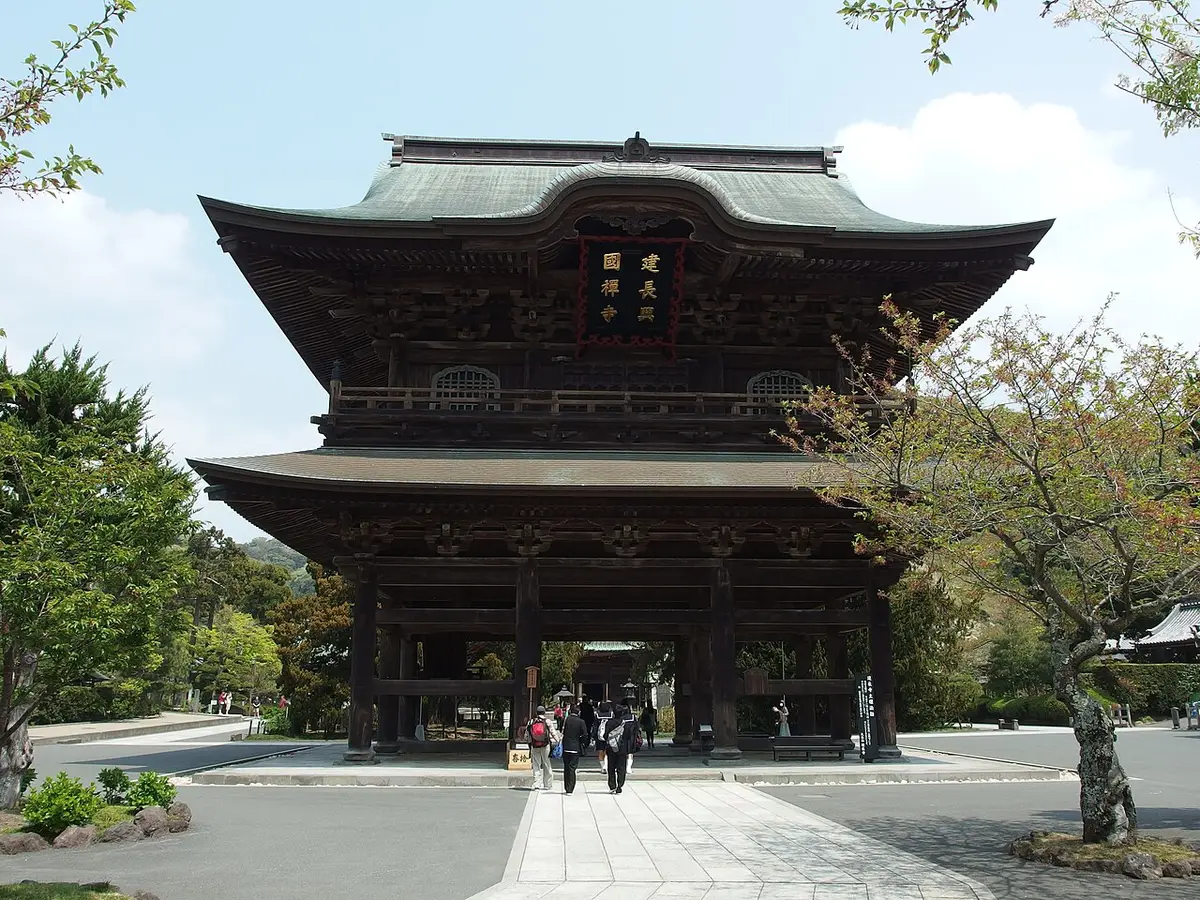
Many guides still list Hachinoki’s Kita-Kamakura branch for shojin ryori. Its own site says that branch operated until summer 2022. The family’s other restaurant, Hachinoki Shinkan, is still open near Tokeiji, 4 minutes on foot from Kita-Kamakura Station, serving kaiseki courses and bento rather than shojin ryori. The founder’s first shop opened in 1964 at the gate of Kenchoji. Call ahead if you need a vegetarian meal. It works well as lunch on a Kita-Kamakura temple walk.
Lunch 11:30-13:30 (last order)Dinner 17:00-20:00 (last order 18:00)Closed ThursdaysFrom Kita-Kamakura Stn 4 min walkMapOfficial site


Sweets and souvenirs
Hato Sabure at Toshimaya
The dove-shaped butter biscuit Hato Sabure is Kamakura’s best-known edible souvenir. Toshimaya, its maker, says the biscuit was created by the founder in the Meiji era. The main store is at 2-11-19 Komachi in central Kamakura, and the company has other shops around town.
Hours 9:00-19:00Closed some Wednesdays (open on holidays)Address 2-11-19 KomachiSells Hato Sabure and other sweetsMapOfficial site
Bean snacks, senbei and matcha
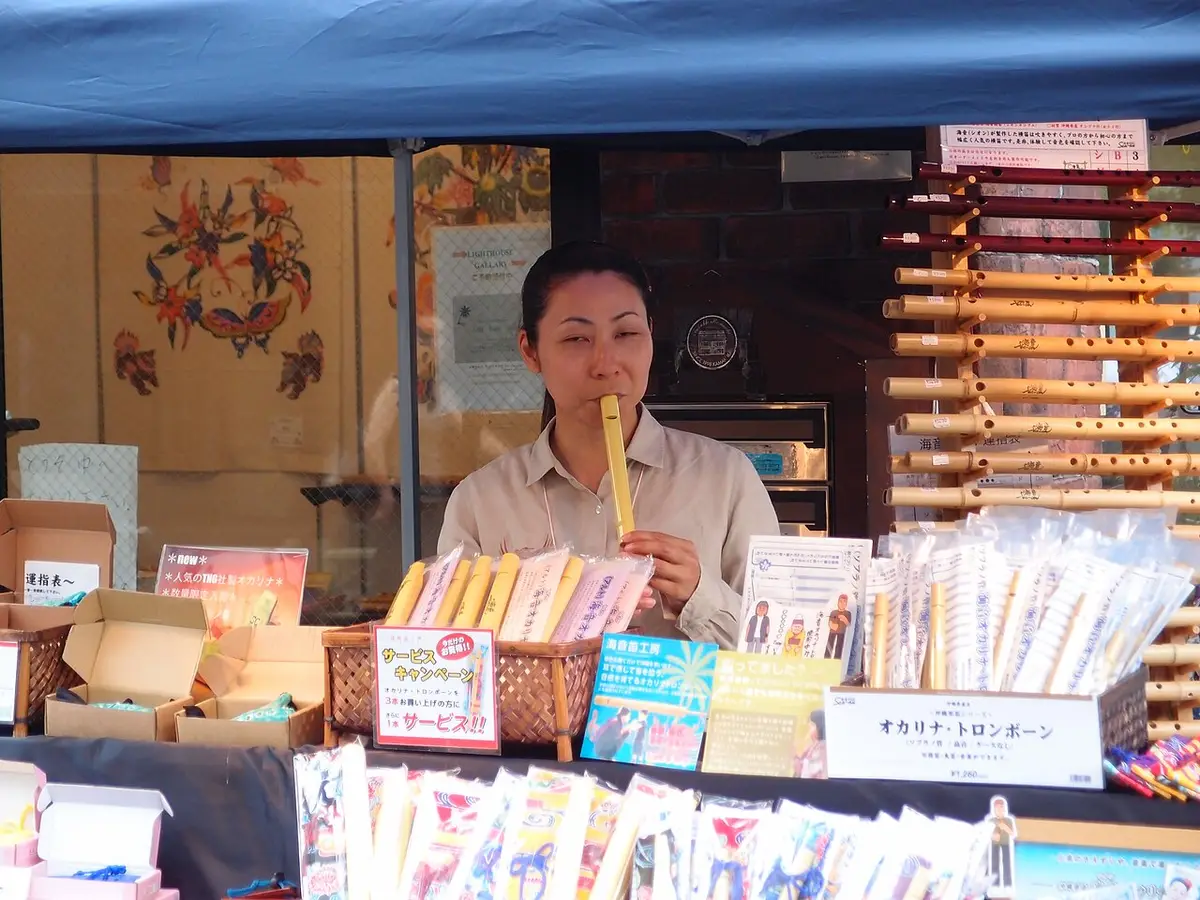
On Komachi-dori you will pass senbei shops, roasted-bean shops and matcha sweets of every kind. One tour we list starts with a tasting at Kamakura Mameya, a bean-snack shop on the street (see below). Buy boxed sweets as gifts on your way back to the station rather than carrying them around all day.

Vegetarian and vegan food in Kamakura
Kamakura’s temple cooking tradition helps vegetarians, but dashi (fish stock) hides in many dishes, including miso soup and noodle broths, so ask.
- Temple lunch. Komyoji’s shojin ryori is fully vegetarian; book well ahead (see above).
- Guided options. Several Kamakura tours build in vegetarian food. The 5-hour Kamakura Historical Walking Tour with the Great Buddha includes a temple lunch with vegetarian and vegan menus, the afternoon sweets walk below is marked vegetarian friendly, and a Zen tour from Kita-Kamakura serves a vegan sushi lunch after sutra copying at Engakuji.
- Sweets. Most wagashi are made from beans, rice and sugar, so they are usually vegetarian; senbei are often brushed with soy sauce.
- Renbai market. Fresh fruit and vegetables straight from local farms, for a picnic.
Useful phrases: “niku to sakana nashi de” (without meat and fish) and “dashi ni sakana wa haitte imasu ka?” (is there fish in the stock?). A translation card in Japanese explaining your diet saves a lot of pointing.
Food tours and cooking classes
A guide helps you find the good stands quickly and explains what you are eating. These are bookable products in Kamakura:
- Samurai History, Great Buddha & Food Tasting Walk: 3 hours in English from Kamakura Station’s East Exit. Starts with a tasting session at Kamakura Mameya, then shirasu, Hayama beef and senbei on Komachi-dori, before Tsurugaoka Hachimangu and the Great Buddha. Meals beyond the tastings are extra.
- Half-Day Walking Tour & Japanese Sweets: 4 hours from 13:00, up to 6 people, with a nationally licensed guide. Train fare, the Great Buddha and Hasedera tickets, and sweets with matcha at a cafe are included; the listing marks it vegetarian friendly.
- Kamakura & Shonan Night Izakaya Bar Hopping Tour: a private 2-hour evening with an English-speaking guide at two local izakaya, about an hour at each, with a food and drink credit at each one.
- Community Dinner with Locals: cook four or five seasonal dishes with Kamakura residents, then eat together, at a shared living space 2 minutes from Kamakura Station. Up to 8 guests; a welcome drink is included. The hosts speak some English.
- Sushi Roll Bento Cooking Class: 2 hours in a host’s home, 12 minutes’ walk from Inamuragasaki Station on the Enoden, for up to 6. You roll sushi, pack a bento and take it sightseeing. Book at least 2 days ahead; raw fish is not used.
For guided walks without the food focus, see our Kamakura tours page.

Planning a food day
- Morning: Renbai market when it opens at 8:00, then Komachi-dori early, before the day-trip crowds.
- Lunch: shirasu-don in town, a temple lunch at Komyoji (booked ahead), or Hachinoki Shinkan on a Kita-Kamakura day.
- Afternoon: matcha in a temple garden, then the Enoden to Enoshima for seafood and an early dinner.
- Before you leave: boxed sweets as souvenirs near the station.
Our itinerary page has timed routes you can hang these stops on, and the cost calculator adds trains and temple fees. For when to come, including the shirasu months, see best time to visit Kamakura and the calendar.

Questions people ask
What food is Kamakura known for?
Shirasu above all: tiny whitebait from Sagami Bay, served boiled (kamaage) or raw (nama) over rice as shirasu-don. Kamakura is also known for its local vegetables, sold at the Renbai farmers' market near the station, for shojin ryori, the vegetarian cooking of Buddhist temples, and for sweets such as Toshimaya's dove-shaped Hato Sabure biscuits.
When is shirasu season in Kamakura?
Kanagawa Prefecture bans shirasu fishing from January 1 to March 10 to protect young sweetfish. The main seasons are spring (April to June) and summer to autumn (from July). Raw shirasu is only served from the same day's catch, so it is missing during the ban and on days when boats stay in port. Boiled shirasu is sold all year.
Is Kamakura in Tokyo?
No. Kamakura is a city in Kanagawa Prefecture, south of Yokohama. It is 56 minutes from Tokyo Station on the JR Yokosuka Line with no change, so it is an easy day trip. Enoshima, a short Enoden ride away, belongs to the neighboring city of Fujisawa.
Can you eat while walking on Komachi-dori?
Kamakura's manners ordinance, in force since April 1, 2019, lists eating while walking in narrow or crowded places among the acts people should avoid, because food can stain other people's clothes. There is no fine. Many snack stands on Komachi-dori have a counter or bench: eat there, then walk on.
Where can you eat shojin ryori in Kamakura?
Komyoji, a large Jodo-sect temple near Zaimokuza beach, serves shojin ryori lunches on Mondays, Tuesdays, Saturdays and Sundays. Book by phone or in person between two months and 11 days ahead; the day's bookings must reach six people. The temple pauses the meals in February, October 10 to 15 and over New Year.
Read next
 Kamakura toursGuided days from Tokyo, walking tours and private guides compared.
 Things to do in KamakuraTemples, shrines, trails and streets with fees, hours and walking times.
 Kamakura itinerariesHalf day, full day and two days with Enoshima, timed leg by leg.
 EnoshimaThe island route, the caves, the Sea Candle and sunset over Fuji.
Sources (11)
- Kanagawa Prefecture: shirasu (fisheries guide)
- Visit Kanagawa: Shonan shirasu cuisine
- Visit Kanagawa: Komachi Street
- Visit Kanagawa: Kamakura farmers' market (Renbai)
- Komyoji (official): shojin ryori
- Hachinoki (official): Hachinoki Shinkan
- Toshimaya (official): shops
- Tobiccho (official): Enoshima main store
- Kamakura City: manners ordinance (ordinance no. 31)
- Kamakura City: Yuigahama-dori landscape district
- Kotoku-in (official): FAQ on food and drink